




• Worldwide, the industrial production of yeast exceeds 1,8 million tons/year, of which baker's yeast has the largest share. The Rompak yeast factory in Pașcani is part of the PAK Group Turkey, one of the world leaders in yeast production. Rompak produces under license Pakmaya and is the only producer of fresh yeast in Romania
Just as the soil gives life to the grain of wheat, so the flour gives life to the yeast. In turn, the yeast gives life to the dough!
Flour, water, yeast and salt are the basic ingredients that have always been used to make bread.
Archaeological research has revealed evidence of the use of yeast fermentation processes for breadmaking as far back as 4.000 years ago in Egypt ("Breadmaking. Handbook," 2018). Bread was a part of everyday life and the Egyptians are considered to be the first people to make bread. Ancient paintings show round or conical bread, and it is very likely that natural yeasts were used in its preparation.
Bakers still treat yeast cultures with the same respect today as in ancient times; they know that during leavening, the dough "comes to life" through the fermentation process.

Industrial production of yeast
Currently, worldwide, the industrial production of yeast exceeds 1,8 million tons/year, of which baker's yeast has the largest share.
Baker's yeast
Baker's yeast is a living, complex organism, made up of billions of cells of Saccharomyces cerevisiae, which have the ability to break down simple carbohydrates, i.e. starch. The activity of the yeast cells in the presence of the starch in the flour results in loosening the dough and also defining the flavor and texture of the bread.
During the fermentation process, the yeast cells become active. Through fermentation, they produce: carbon dioxide (CO2), having the role of a dough loosening agent, and ethyl alcohol, responsible for the taste and aroma of the bread.
Baker's yeast is available in two forms: compressed yeast (fresh) and dry yeast.
Compressed yeast (fresh)
Compressed yeast is the most widely used and is marketed as a mould, in waxed paper packaging, which allows the transfer of moisture, because during storage the yeast expels water. This process is natural and does not affect the qualities of the yeast, the number of live cells remaining unchanged. If stored at the temperature recommended by the manufacturer, fresh yeast has a shelf life of at least 40 days.

How is compressed (fresh) yeast made?
In a simplified version, the production process can be presented as follows:
- selection
Yeast cells are selected.
- Preparation
In order to reproduce, the yeast cell needs an environment with a stable temperature and a continuous source of food (vitamins, nitrogen, phosphate), but also the presence of oxygen and a moderate pH.
- Production
It takes place in four chronological stages: preculture, pure culture, seed yeast, commercial yeast.
- Separating the cream from the yeast and filtering
- PACKING
The entire production chain, from cropping to packaging, takes 7 days. For this reason, the industrial production of baker's yeast requires a rigorous microbiological control in all production phases, by carefully checking the degree of hygiene, starting from detailed analyzes of the raw materials and continuing with the monitoring and control of the production process.
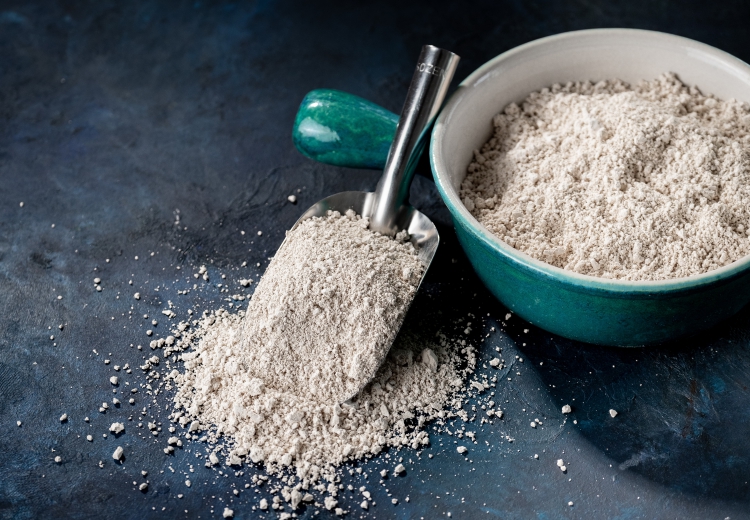
Fresh yeast must "breathe"
Preservation of live cells from fresh yeast requires keeping it at temperatures between 0° C and 6° C. Thus, the cells are kept in a state of hibernation. The closer the yeast is kept to 0°C, the better it will be for longer use.
At the same time as respecting the temperature, it is also necessary to ensure good air circulation, so that the heat released by the yeast can be taken over by the cooling process.
It should be noted that yeast can lend foreign odors from the storage space, if other foods are also stored there.
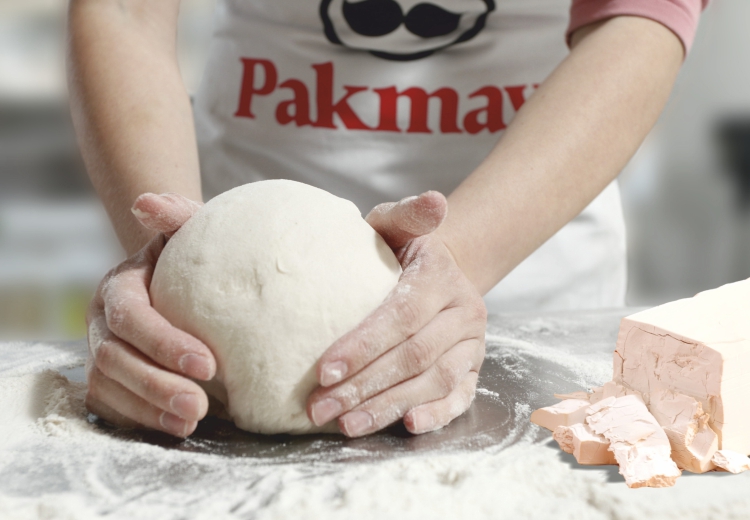
The only producer of fresh yeast in Romania
Rompak produces Pakmaya under license and is the only producer of fresh baking yeast in Romania.
The Rompak yeast factory in Pașcani is part of the Pak Group Turkey, one of the world leaders in yeast production.

In order to offer products as best adapted to the market and requirements, the Pakmaya Research & Development Center was established in 2003, where the team of engineers specialized in the food industry, chemists and biologists work to enrich the range of products.
With the desire to be with customers and help them solve their functional problems they encounter in the production flow, Pakmaya makes available the laboratories and specialists within this center.
"The production of fresh yeast brings us great satisfaction knowing that it is found as an ingredient in products consumed by approximately 15 million people, but it is also a huge responsibility that forces us to pay special attention to safety and quality measures", say Pakmaya Romania representatives.
Today, Pakmaya's portfolio includes more than 100 products, a wide range of solutions, from raw materials, flour improvers, bread additives, to bakery mixes and other auxiliary ingredients.
Read on the website Arta Albă and Cozonacul – traditional recipes or modern reinterpretations


Bonjour, I want to be a partner with Pakmaya yeast products 500g 1+2