




• Gingerbread, with its warm scent of spices and comforting texture, is more than just a dessert – it is a story woven from centuries of tradition, cultural migration and gastronomic creativity.
The origins of gingerbread are lost in the mists of time, with records dating back to ancient China around 5000 BC, where ginger was cultivated not only for its spicy taste but also for its medicinal and, it was believed, magical properties. Ginger, the defining ingredient of gingerbread, was used to preserve food and treat various digestive ailments.
Through the Silk Road, this precious root reached Europe, where it was quickly adopted for its ability to preserve food, but also for its distinctive flavor, with some food historians claiming that the first known gingerbread recipe dates back to around 2400 BC in Greece.
By the 10th century, Chinese recipes were already refining the use of ginger in cakes, and by the end of the Middle Ages, Europeans were developing their own variations. Surprisingly, some medieval recipes, like the one in "Forms of Cury" (14th century), did not include ginger, but used a mixture of spices such as saffron, cinnamon and pepper, which, combined with honey and dried, ground bread crumbs, imitated the characteristic taste of gingerbread. This creative adaptation to the availability of ingredients, which did not even require baking, demonstrates the ingenuity of the cooks of the time.

Grigore de Nicopole, promoter of the technique of making gingerbread
Legend has it that gingerbread was introduced to Western Europe in 992 AD by the Armenian monk Gregory of Nicopolis (also known as Gregory Makar). He left Nicopolis in western Greece and settled in Bondaroy, near Pithiviers in central France. For seven years, until his death in 999, Gregory taught French Christians the technique of making gingerbread, a practice he probably brought with him from the eastern Mediterranean, which highlights the role of cultural exchange in the spread of recipes.
By the 13th century, gingerbread was already well established in Europe. In Toruń, then part of the Teutonic Order (today in Poland), gingerbread became famous, and the city remained an important center of its production. In Germany, the guild of bakers who also baked gingerbread (Gingerbread from Ulm and Nuremberg turned this delicacy into an art. In fact, Nuremberg, nicknamed "The Gingerbread Capital of the World" In the 1600s, it became synonymous with elaborate creations, carved into complex shapes using wooden molds and often finished with gold leaf, resulting in true edible works of art.

Gingerbread as an element of tradition
Gingerbread quickly became a symbol of celebration and hospitality throughout medieval Europe. In Sweden, nuns at Vadstena Abbey baked gingerbread in 1444 to relieve indigestion, but also to create white-painted biscuits that served as window decorations. In England, gingerbread was considered to have medicinal properties, being described in the 16th century by John Barrett as a "stomach-soothing cake".
Queen Elizabeth I is credited with introducing gingerbread figurines to her court, shaped like important guests and given as gifts at royal feasts. The dessert was even mentioned in Shakespeare's play Love's Labor's Lost from 1598: "An I had but one penny in the world, you should have it to buy gingerbread" ( "If I had only one penny in the world, I would have it to buy gingerbread").
In the following centuries, gingerbread in various forms became popular throughout Europe, with figurines and models being used as decorations or given as gifts on religious holidays or birthdays.
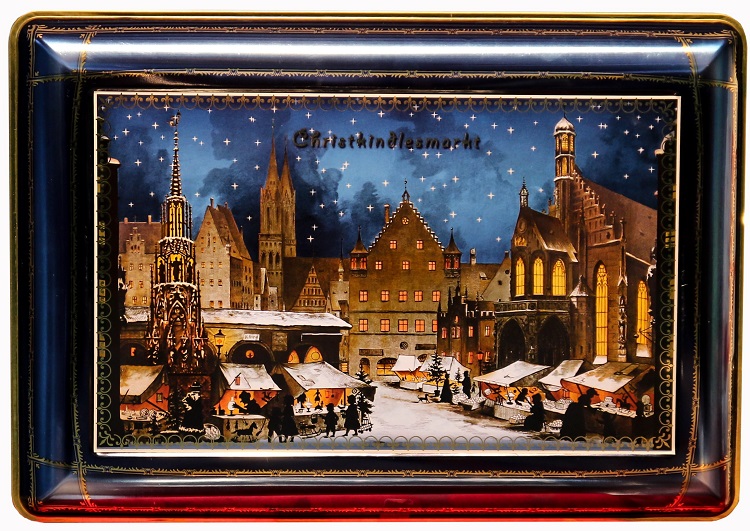
Medieval fairs, known as "gingerbread fairs" in England, France, Holland and Germany, contributed to its popularization. But these small biscuits or "fairings" They were sold not only at fairs but also in monasteries, pharmacies and markets, thus becoming a popular treat. In the 17th century, gingerbread was widely traded in England, and in the 18th century, the town of Market Drayton in Shropshire became famous for its production, proclaiming itself theit's "the gingerbread house".

Gingerbread houses: the delicious Christmas tradition
One of the most emblematic manifestations of the flavored biscuit is the gingerbread house, a tradition that took off in 19th-century Germany, inspired by the fairy tale "Hansel and Gretel" by the Brothers Grimm, published in 1812. In the story, two brothers, lost in the forest, discover an edible house made of bread, cakes, and sugar, which, in later versions, was reinterpreted as being made of gingerbread. The original fairy tale includes the line: "When they approached the house, they saw that it was built of bread and covered with cakes, and the window was made of transparent sugar".
Inspired by the story, German bakers began making small houses out of gingerbread, cookies seasoned with honey, decorated with icing, candies and candied fruit, these colorful creations quickly became a symbol of Christmas. The popularity of gingerbread houses grew with the spread of the fairy tale, and the tradition spread to Europe and North America. In fact, as early as the 16th century, German bakers were already using gingerbread dough to create elaborate artistic forms, gingerbread houses being a natural evolution of this practice.

Today, building a gingerbread house is a family activity, especially popular at Christmas time, representing both an expression of creativity and a delicacy that delights all ages. In Norway, the city of Bergen hosts the annual "Peppercake Town" (Gingerbread City), a miniature village with over 2.000 festively lit gingerbread buildings that attracts tourists from all over the world. And an impressive example of this tradition is the record for the largest gingerbread house, set in 2013 at the Traditions Club in Bryan, Texas. Measuring 18,28 feet long, 12,8 feet wide, and 18,28 feet high, this construction required 4.000 "bricks" of gingerbread, 820 kg of butter, 1.327 kg of brown sugar, 7.200 eggs and 31 kg of ground ginger, with an estimated caloric content of 35,8 million calories.

Gingerbread in the New World
Gingerbread arrived in America with the first European settlers, especially the English. In the United States, molasses, cheaper than sugar, became a staple ingredient, resulting in a softer, moister version of gingerbread. The first American cookbook, American Cookery by Amelia Simmons (1796), includes seven different recipes for gingerbread, one of which, "Soft gingerbread baked in pans", is considered the first written recipe for traditional American gingerbread. One notable recipe is that of Mary Ball Washington, mother of George Washington, known as "Lafayette gingerbread", served to the Marquis de Lafayette during his visit to Virginia.
In Mexico, gingerbread influenced the emergence of little pigs or marranitos, cookies cut into the shape of a pig, flavored with cinnamon and star anise and sweetened with piloncillo (raw sugar)These, available year-round, are the perfect example of adapting European traditions to local ingredients and tastes.

The symbolism of the biscuit flavor
Gingerbread is deeply connected to Christmas traditions, but also to other holidays, traditions and superstitions. In Sweden, gingerbread was believed to bring good luck, being used to make wishes. In England, it was said that unmarried women who ate gingerbread men had a better chance of finding a husband. In the Netherlands, Peppernuts, ("walnuts with pepper") Small, crunchy biscuits with ginger, white pepper, cinnamon and other spices, such as anise, coriander and cloves, are associated with the feast of Saint Nicholas (December 5), being distributed to children by Sinterklaas, (Santa Nicholas in Romanian tradition), a mythical character who brings gifts at night in the boots of sleeping children.

In Germany, to print Aachen's "Gingerbread", a type of gingerbread sweetened with beetroot syrup, is a symbol of local tradition and, by law, can only be produced in this area. The city is home to Klein Printen bakery, which also functions as a museum of the history of this unique cookie. The use of beet syrup for sweetening, instead of sugar or honey, dates back to the Napoleonic Wars when the basic ingredients were difficult to obtain. Because the lack of honey or sugar makes the texture of the cookie hard, it is placed in boxes immediately after baking, to soften from condensation before consumption. These cookies, shaped into detailed shapes using wooden molds, a testament to the craftsmanship of German bakers, are still made in the Klein bakery according to the traditional method.
Gingerbread today
Today, gingerbread remains a symbol of joy and creativity. From gingerbread men decorated with sweet, colorful icing to elaborate family-built houses, this delicacy continues to bring people together around the holiday table and beyond. Events like Gingerbread City from the Architectural Museum in London or Gingerbread Lane from New York proves that gingerbread is not just a dessert, but an edible art form that inspires and delights.
Whether enjoyed as a traditional remedy for indigestion, an edible Christmas decoration, or an expression of creativity, gingerbread carries a rich history, strongly flavored with spices and sweetened with stories. It is more than just a cookie – it is a living legacy that continues to warm our hearts and homes, especially around the holidays.
Article sources: A short history of gingerbread; Medieval Gingerbread Was So Fancy We Wouldn't Recognize It; What Is Gingerbread? The Answer Is Complicated.
Article written by Gabriela Dan, Editor-in-Chief Arta Albă
Read on White Art and: Recipe – Royal Icing Glazed Gingerbread

