




• Baker, consultant and trainer with over four decades of experience, Massimo Lolli is one of the Italian specialists who have brought back to attention the authentic value of sourdough with natural yeasts.
Heir to a family tradition of over 100 years, Lolli grew up among ovens, aromas and stories about natural fermentation. On the occasion of his visit to Romania to support the seminar "Bakery and pastry workshop with natural yeast", we had the pleasure of chatting about his passion for yeast, the benefits of natural fermentation, and the future of this fascinating world of baking. Discover the master baker who talks about bread as a work of art.
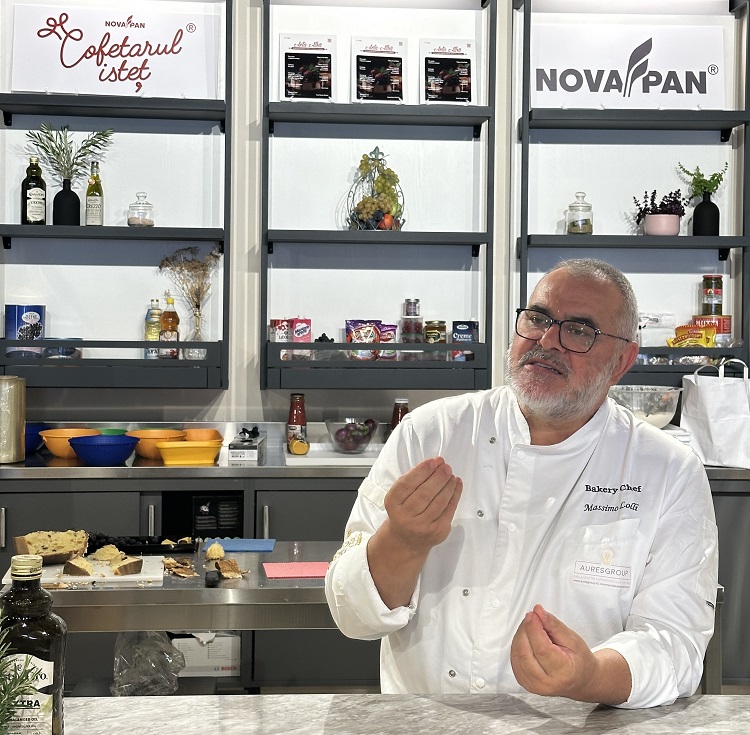
1. Can you tell us why you chose to work and specialize in yeast dough? How did your passion for this living ingredient come about?
My passion for yeast comes from a long time ago, from the history of my family, which has over 100 years of tradition in baking. My grandfather opened the first bakery in 1923, and my father, born in 1932, continued the tradition by opening another bakery. I grew up among sacks of flour and the aromas of warm bread. I remember how, as a child, my father and grandfather taught me to recognize the smell of yeast. At first, it seemed like a strange, acidic smell that stung my nose. But they explained to me that I had to understand these aromas.
After a lifetime dedicated to this profession, I am happy to see that the world is rediscovering the value of natural fermentation today. I see a return to nature and yeast, which had been somewhat forgotten between the 70s and the period before the pandemic. Back then, bakers, in order to keep up with industrialization, preferred brewer's yeast, which was faster and easier to use. Now, however, there is a return to tradition, and I am proud to be part of this wave that began in my childhood.
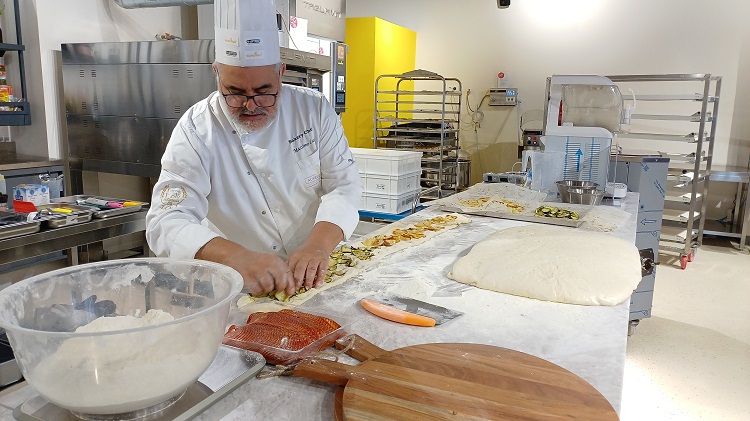
2. You organize demonstration events and provide technical consultancy in different countries. This is your first visit to Romania and, on this occasion, you held a seminar entitled "Bakery and pastry products prepared with natural yeast" in the Baking Show space of the Nova Pan company in Brașov. How did you perceive the interest of Romanian participants in this topic compared to those from other countries?
I was truly impressed. I saw in the eyes of the participants a genuine curiosity, a thirst for knowledge. They were very receptive, first to the theoretical part, and then to the practical part, where they had the opportunity to touch the dough obtained with yeast, to feel its aromas and taste.
I remember a moment from my first day in Romania: we stopped at a gas station, at a car park, where we were served a large, beautiful sliced bread, but without any taste, without aroma. Exactly that absence "of the soul" is corrected by using natural yeast. This is what I tried to convey during the Baking Show demonstration. The participants were extremely motivated when they tasted the products made in the practical section, based on the theoretical part of the morning. I received compliments from my Romanian colleagues for the way I managed to arouse their interest and inspire them to put the highest quality products on the tables of Romanians.
3. What are the most underrated nutritional benefits of yeast dough compared to brewer's yeast?
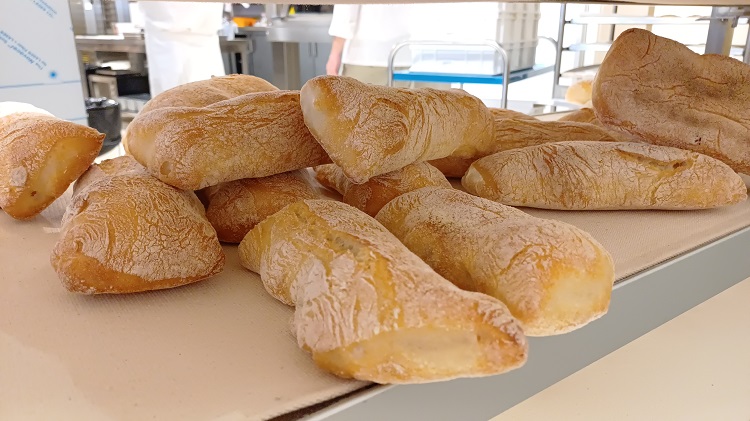
We should not demonize brewer's yeast – it was and remains a useful ingredient that we can use without any problems. But sourdough brings unique benefits. First, much better digestibility. Second, the durability of the product – a loaf of bread made with sourdough stays fresh for even two days, while a classic one dries out in a few hours. And, of course, the aromatic profile: sourdough develops complex aromas, perfumes and taste notes that no other fermentation can reproduce. Each bread acquires its own identity, a signature of the baker and nature.
4. For beginners, what is the secret to getting a strong and active yeast dough?
There are no hidden secrets. You just need patience, passion and practice. I always say: put your hand in the dough, observe, experiment, make mistakes, then try again. Natural fermentation is only learned through daily practice. With patience and practice, anyone can achieve a strong yeast. I am convinced that, on my next visit to Romania, I will find the current students much more skilled.
5. What types of flour do you recommend for natural fermentation and why?
To obtain a dough with good development and rich taste, it is important to use flours rich in protein and nutrients, which also provide flavor. I recommend flours with fiber and wheat germ, but also corn or rye, excellent for creating varied and distinctive flavors, which enrich the final product. Carefully chosen flour gives character to the bread.

6. What is the role of starters, such as yogurt, fruit or honey, and when is it better to avoid them for purely spontaneous fermentation?
Starters such as honey, fruit or yogurt should not be avoided, as they all successfully contribute to excellent results. Honey, for example, contains maltose and fructose, which provide flavor and help activate fermentation. And fruits, especially in summer, contain microorganisms on their skin, very active natural yeasts. It is important to choose them of good quality and to understand what role each one plays in the process. Nature gives us everything we need.
7. Based on your experience, what are the key differences between using fermented dough in artisanal and industrial production and how should techniques be adapted accordingly?
At first, you may need professional guidance to avoid wasting time and raw materials. Once you understand the process, there are no major obstacles – sourdough with natural yeasts can also be perfectly adapted to industrial production. Experimentation is the key, and with time you can reach large volumes without any problems.
Besides, the pandemic has changed us all. People are more careful about what they eat, and we, the professionals, have an enormous responsibility. I always say that the baker is, in a way, a pharmacist or a doctor: if we use good ingredients and correct methods, we contribute directly to the well-being of those who buy our bread.

8. How can fermented dough be maintained during periods of inactivity, avoiding loss of strength or excessive acidity?
There are several methods. For periods longer than ten days, the sourdough can be frozen using a blast freezer, following a program "awakening" by successive feedings (refreshments). For shorter periods, up to seven to ten days, the yeast can be kept in the refrigerator. Even if it loses a little of its vigor, it can be revitalized by a series of refreshes over two days. With a little care, a yeast can live for years.
9. How do you recommend adjusting the temperature and amount of water to maximize enzymatic benefits?
This is where modern technology comes in, which is a tremendous ally. Automatic fermenters For yeast, I do everything today, automating the production process: I mix, ferment, cool, and keep the yeast ready to use for up to three days.
Investing in such a equipment It pays for itself quickly, thanks to the quality and quantity of products sold. And the process is simple: the equipment can be operated even by an apprentice, who adds the required amount of flour and water. For those who prefer the artisanal method, optimal fermentation takes place in 4–5 hours, at a temperature of 25–30°C, followed by storing the dough in the refrigerator.
10. For sweet products, such as brioche, what methods should be used to balance sweetness and flavor without compromising digestibility?
In pastry, yeast is used in smaller proportions than in baking – usually between 5 and 10%. It is important that the fermentation is gentler, less acidic. The ideal pH is between 4,2 and 4,4, which allows for the production of aromatic and easily digestible products.
11. What does the future hold for natural yeast products, both in the artisanal and industrial sectors?
I am convinced that the use of sourdough will increase significantly. The pandemic has made us more careful about what we put on our plates. Coming from the 60s, I sometimes joke that we are alive by a miracle, given how many dyes and preservatives we have consumed. Our children are luckier – today, people are talking about naturally fermented dough, about health, about authenticity.
Interview conducted by Gabriela Dan, Editor-in-Chief of Arta Albă, during the seminar "Bakery and pastry workshop with natural yeast", supported by Massimo Lolli in Brașov.
Read on White Art and: Maiaua – the foundation of artisanal bakery

