




• In 2025, the fast-moving consumer goods (FMCG) market in Romania is going through a transformational phase, shaped by a consumer increasingly attentive to value for money, but willing to invest in products that offer real value.
A recent study conducted by NielsenIQ, presented at the Shopper World event in May 2025, reveals a complex landscape of purchasing behavior, influenced by economic caution, accelerated digitalization and a more strategic approach to promotions.
Romania continues to experience modest economic growth, with GDP expected to grow by around 3,3% in 2025, according to International Monetary Fund projections. Inflation has stabilized at around 5%, and wages have increased slightly, contributing to a modest improvement in purchasing power. However, over 50% of Romanians say their income covers only basic necessities, reflecting a general sense of financial vulnerability. Although 84% of consumers perceive a continued increase in prices, this proportion is down from 2024, and optimism regarding a better financial situation by the end of the year places Romania above the European average, but below the global average.
Buying behavior: price matters, but it's not everything
Romanian consumers are adopting pragmatic strategies to cope with financial constraints. Many are choosing more affordable products, carefully monitoring their spending and placing greater importance on promotions. However, promotional activity in FMCG has decreased, and NielsenIQ data indicates a decrease in the tendency to change stores only for offers. Surprisingly, promotions have less influence on the decision to choose a particular brand, with a minority segment of consumers stating that offers change their preferences.
However, price is not the only deciding factor. Almost 65% of Romanians are willing to pay more for higher quality, and 48% value convenience, both trends being on the rise. Also, 49% of consumers actively seek sustainable products, with a stronger interest among younger generations (Gen Z and Millennials) for sustainability, while older generations (Boomers and Gen X) prioritize health. However, overall, budget remains the main priority, even in the face of values such as health or care for the environment.
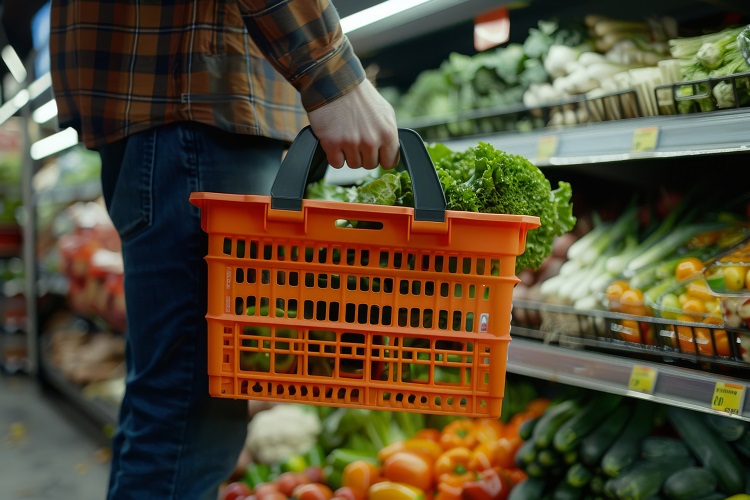
Hypermarkets are gaining popularity, being visited by an increasing number of consumers each month, while discount stores and supermarkets are experiencing a decrease in visit frequency. However, smaller store formats are growing rapidly, responding to the need for proximity. In rural areas, purchasing behavior reflects an orientation towards modern but accessible channels.
Monthly core purchases and weekly refills are slightly down. Consumers prioritize replenishing basic supplies, meal prep, and occasional pantry purchases. In terms of information sources, mobile apps dominate, followed by printed flyers, while television is losing relevance. Approximately 43% of consumers choose stores based on promotions, but store loyalty is increasing, with the average city dweller visiting 3,3 stores per month.
Loyalty and private brands: a delicate balance
Loyalty programs play an important role in Romanian retail. Retailers such as Lidl, Kaufland and Auchan have the most widely used loyalty cards, with Kaufland being perceived as offering the most benefits. Private labels contribute to loyalty, with 52% of consumers trusting retailer brands. However, interest in these brands decreased slightly in 2025, and their market share is stagnating, amid price increases in recent years. At the European level, private labels hold 36% of the market, with Switzerland leading the segment.
For the Romanian consumer, the ideal store is well-organized, offers easy-to-find products, competitive prices and value for money. Loyalty, quality and a pleasant in-store experience are differentiating factors. Gas stations are becoming increasingly relevant competitors to traditional retail, offering attractive promotions and convenience. NielsenIQ data shows that 14% of gas station customers buy products for household consumption, from water and sweets to dairy or basic food.

Certain product categories influence store choice. For example, Kaufland is associated with meat and wine, Lidl with dairy products, and DM with personal care and household products. Categories such as diapers, fresh fruit or meat, cause consumers to choose specific stores, while products such as beer or water are perceived as similar across all stores.
The Romanian FMCG market in 2025 is marked by a delicate balance between caution and a desire for quality. Consumers are more calculated, but willing to invest in products that offer value, sustainability or convenience. Retailers must carefully navigate this dynamic, investing in loyalty, store formats adapted to consumer requirements and strategic communication of promotions. The NielsenIQ study, based on interviews with 1.600 urban consumers and data from retail analytics, highlights the complexity of a landscape in which price remains important, but value becomes the key to success.
Article written by Gabriela Dan, Editor-in-Chief Arta Albă
Read on White Art and: Tetra Pak launches an innovative packaging technology

