




• Article written by Lorena Deleanu1,2, Constantin Georgescu1, Liviu Catalin Solea1, Dionis Guglea1, Cristina Popa3.
1"Lower Danube" University, Galați, Romania; 2Romanian Academy of Technical Sciences (ASTR), Bucharest, Romania; 3 Romanian Standardization Association (ASRO).
Introduction
In research, but also in administration, debates are taking place about current issues related to the presence of hazardous substances in the workplace and ways to reduce risks in their use. An interesting topic is the potential of some materials, and fluids also fall into this category, to contribute to increasing the risk of fire, under certain conditions of use, which may occur accidentally. That is why the need for specific regulations has arisen in the field of assessing the conformity of products of this type with technical prescriptions, a requirement that can be considered a component of sustainable development in the extractive industries [1], [2], but also in other areas: transport, technological processes, including those in the food industry and tourism.
From the point of view of the risks associated with hazardous substances, one of the most researched properties of oils is their flammability in contact with hot surfaces, which can lead to spontaneous ignition. Hydraulic fluids are the most studied category of oils from this point of view, but there is also interest in vegetable oils, used as food or as industrial fluids. Some oils are also present in the extractive mining industries, where accidents caused by spontaneous ignition can have serious consequences, both for infrastructure and utilities, and for the safety and health of personnel.
The European Union has established serious and extensive regulations in the field of protection of the safety and health of workers. An example is Council Directive No. 104 of 3 December 1992 (92/104/EEC) on the minimum requirements for improving the safety and health protection of workers in surface and underground extractive industries (twelfth individual Directive within the meaning of Article 16(1) of Framework Directive 89/391/EEC), as amended by Directive 2007/30/EC of the European Parliament and of the Council of 20 June 2007 [3].
But the risk of vegetable oils catching fire on hot surfaces also exists in the food industry and even in everyone's kitchen. Vegetable oils are used in the food industry for food processing, but also in equipment, as more environmentally friendly and low-toxicity lubricants.
This directive was transposed into Romanian legislation late, through Decision No. 1049 of 09/08/2006 on the minimum requirements for ensuring the safety and health of workers in the surface and underground extractive industry [4].
Fire and its effects are hazards in all economic activities because, due to the technological process and/or design solution, they generate temperatures high enough to initiate and sustain fire. For example, the steel and glass industries, the chemical industry are recognized as involving processes characterized by high temperatures that arise from technological requirements, but also due to friction, especially in the case of defective lubrication or the elimination of lubricant for various reasons. The analysis of the consequences of fire in the work area is today much more complex and must highlight the short and long term implications: costs of production interruption, costs related to personnel health and safety, impact on the environment and sustainability of the organization, etc.
The term fire resistance is poorly understood or interpreted relatively when it comes to fluids. Specialists find it appropriate to standardize the terminology and review the accepted test methods for assessing the fire resistance of a given fluid [5]-[7]. There is no single property or test for a fluid that qualitatively quantifies its resistance to fire or ignition. Typically, tests to evaluate the fire resistance of fluids are “simulated incidents” so that the tests are a repeatable replica of the worst-case scenario in typical applications where a fluid is used with a potential fire hazard. Fluids either pass or fail these tests, and those that pass are included in the recommendations [8].
Potential ignition sources include not only red-hot or molten metal parts, sparks or flames, but also hot surfaces such as engine exhaust manifolds, pressurized steam lines and hot equipment casings. Fire-resistant fluids (many synthetic), while safer, cost more than petroleum-based fluids and/or require modifications to equipment or operating parameters.
“Fire resistant” does not mean “fireproof” or flame retardant, and almost any fluid can burn under certain circumstances.
The diversity of test methods for establishing the fire resistance properties of fluids, as shown in Figure 1, has led to the formulation of different definitions for explaining "fire resistance".
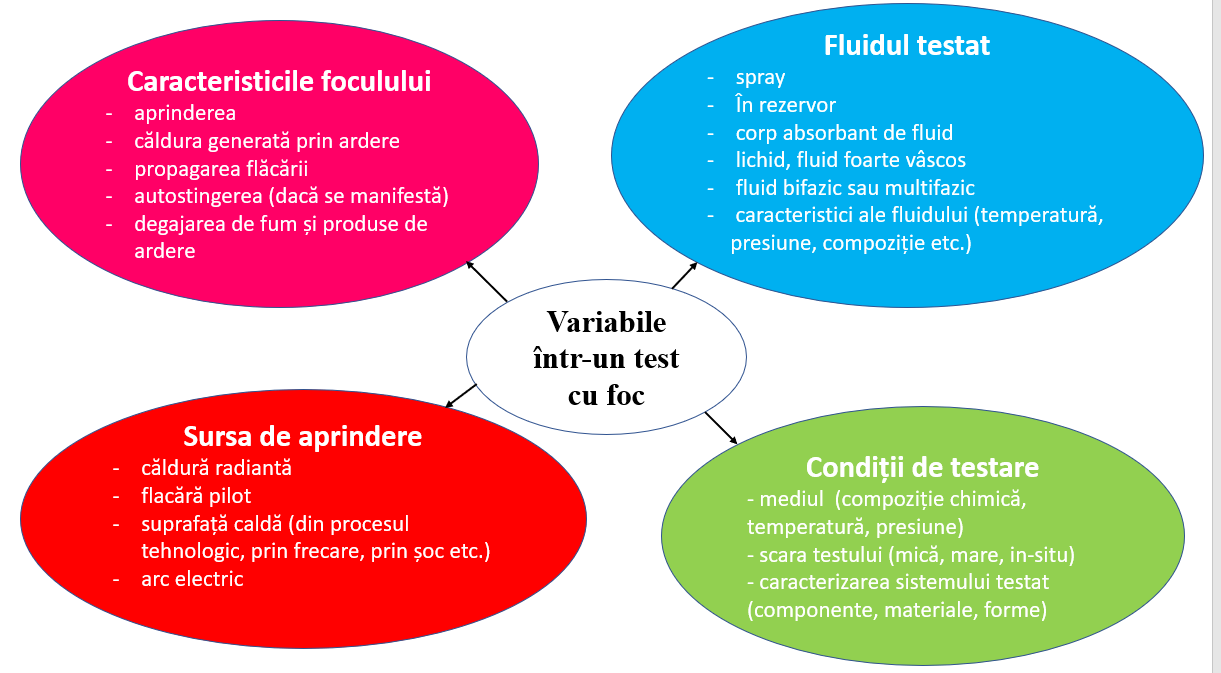
Figure 1. Variables in fire tests, for fluids only, according to [9] and [10]
Zinc MD [9] proposed that a fire-resistant fluid should have the following properties:
- the fluid must be resistant to ignition;
- the fluid must have the ability to extinguish the flame and prevent its spread when the ignition source is present;
- the fluid will self-extinguish when the flame/ignition source is removed.
Test procedure for assessing the flammability of fluids on hot surfaces
Research on the behavior of fluids on hot surfaces (with or without ignition) was conducted out of the need to assess the risk of the presence of two factors that would interact, the fluid and the hot surface, without being included in the standards.
Wright, Mowery and LePera [11] present an approach to the issue of hydraulic fluids in critical situations, where survival depends on the fire resistance properties of these fluids, especially for military equipment. In addition to spray ignition tests, the hot surface ignition test is also presented, included in the NPFC-FED-STD-791 Testing Method of Lubricants, Liquid Fuels, and Related Products Federal, in the version prior to the publication of the article, today the 2021 edition, FED-STD-791E Testing Method of Lubricants, Liquid Fuels, and Related Products [12]. This test determines the flammability of a fluid in contact with a hot metal surface. This document is closest in terms of method, procedure and quantification of results to ISO 20823:2003, also adopted as a European and Romanian standard in 2004 [13]. The fluid is dropped onto a refractory steel tube, heated with an electrical device, inserted into the tube. The temperature at which the test detailed in [12] is performed is 1300 °F (704 °C) – a temperature very close to that introduced in SR EN ISO 20823 (which is 700 °C). The drip rate and the volume of the fluid sample tested are the same as in the ISO standard: drip time 40…60 s and drip volume 10 ml. The resulting jet is examined in terms of the result after falling on the tube. The fluid can ignite, burn both on the tube and when falling from it into the collecting tray. The results are reported as [13]:
- a) "I(T)" when the fluid ignites or burns on the tube but does not continue to burn when collected in the pan below,
- b) "I(D)" when the fluid ignites and burns on the tube, and continues to burn when collected in the tray below,
- c) "N" when the fluid does not ignite or burn at any time.
Standards for evaluating the fire characteristics of fluids were introduced after serious accidents in which it was proven that the fluid actively participated in the initiation and/or maintenance of fire. Phillips et al. [14] and Shermann JV [15] promoted the development and application of standards for fire or ignition testing of fluids, emphasizing the idea that for applications with high fire/ignition risk, fire-resistant fluids, especially synthetic ones, are required, some compositions not igniting even at 700 °C, a temperature included in both the American standard (704 °C) and the international one.
The fluid ignition test on a metal surface (which simulates an accident on a real part) determines the flammability of fluids, keeping the temperature of the metal surface constant. In accidents, the temperature may increase as the fire develops. The method also allows the ignition temperature of the fluid under study to be determined by gradually increasing the temperature of the tube onto which the fluid is dropped. The method is used, in particular, to determine the ignition resistance of fire-resistant fluids that are difficult to ignite. This procedure is also specified in SR EN ISO 12922:2020 Lubricants, industrial oils and related products (class L). Family H (Hydraulic systems) [16]. Specifications for hydraulic fluids of categories HFAE, HFAS, HFB, HFC, HFDR and HFDU.
Test facility and test procedure
Tests were performed with an original, automated installation from the "Dunărea de Jos" University in Galați, to protect the operator and reduce the risk of ignition outside the premises (Figure 2).
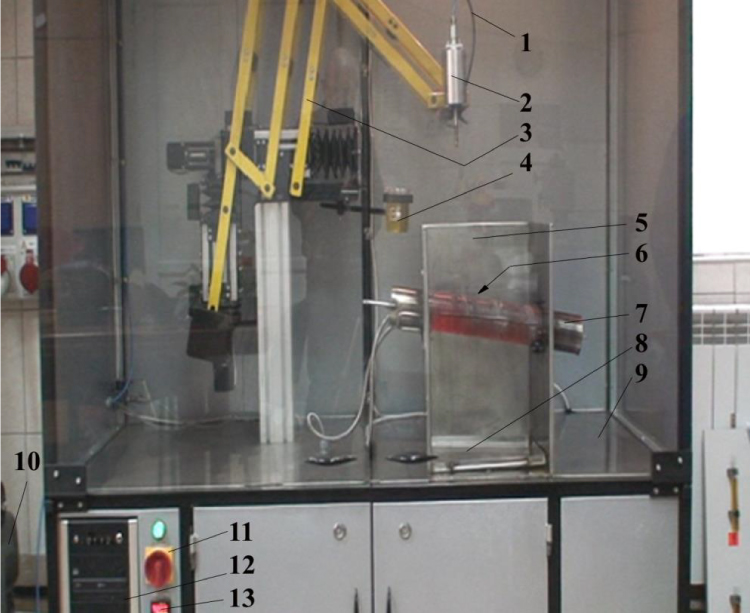
Fig. 2. Installation for testing the flammability of fluids on a hot surface. 1 – cooling system for the dropper, 2 – dropper with cooling jacket, 3 – 2D manipulator for the dropper, 4 – tank with the fluid to be tested, 5 – stainless steel enclosure, 6 – thermocouple protected by a welded housing on the inclined tube, 7 – inclined tube, heated with an internal electrical resistance, 8 – tray for collecting the fluid falling from the tube, 9 – ventilated enclosure protected with fire-resistant glass, 10 – compressor serving the dropper, 11 – main switch, 12 – computer ensuring the regulation and operation of the installation, 13 – display for the inclined tube temperature [10]
The procedure complies with the standard SR EN ISO 20823:2004 [13] and offers the possibility of automatic operation of the installation, data recording and video recording of the test. The test includes the following operations.
- Cleaning the outer surface of the tube, which should be approximately at room temperature, by rubbing with a wire sponge, with absorbent cotton soaked in cleaning solvent and finally with dry cotton. Cleaning the tube between tests is preferably done without removing it from the holder, but with the heating element electrically insulated or removed.
- Mounting the dripper above the tube axis and 300 mm above its surface, in the middle of the inclined tube.
- Fill the dropper with the fluid to be tested, at 20°C to 25°C. The standard states that 3 repeated tests can be made on the tube, with drops equally spaced from the middle of the tube, starting with the lowest position on the tube and then higher up the tube.
- Testing the fluid drip time and adjusting the drip rate using a valve mounted on the flow pipe.
- Connecting the heating element and balancing the temperature to the value desired by the operator (maximum 700 ºC ± 5 °C), as indicated by the thermocouple protected by a metal enclosure, welded to the inclined tube.
- Checking the closure of explosion-proof windows.
- Drip the fluid onto the tube at a constant drip rate so that 10 ml of the test fluid is dripped in 40 s to 60 s.
- Observing and filming the behavior of the fluid, both on the surface of the tube and when the fluid falls into the tray below.
Repeat the test 2 more times at the same temperature by following the procedure, for new positions on the tube, each at least 50 mm higher on the tube than the previous contact area.
Results on the flammability of vegetable oils on hot surfaces
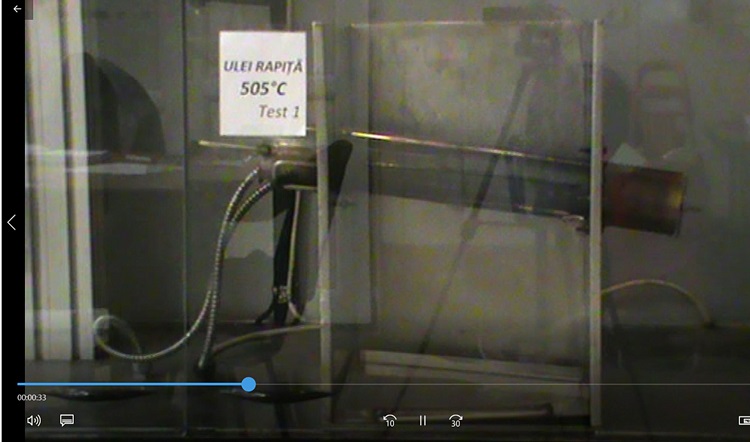
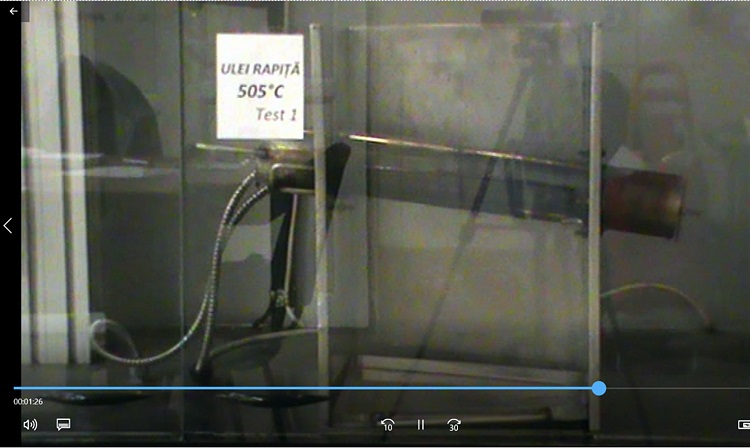
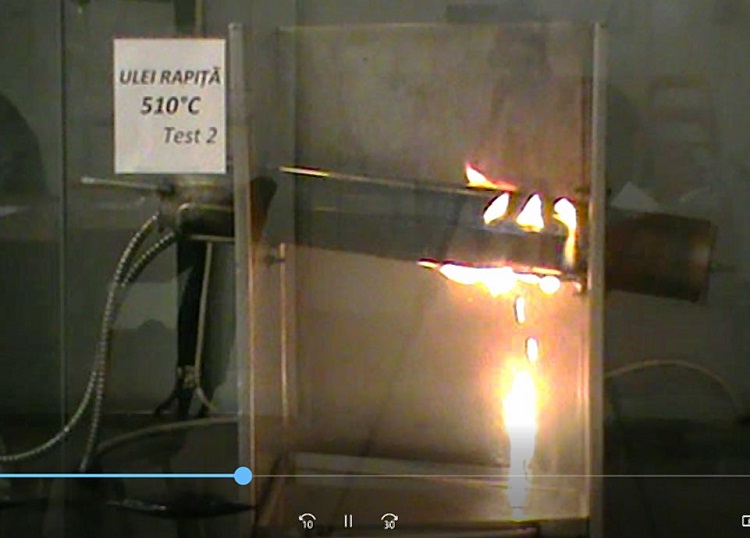
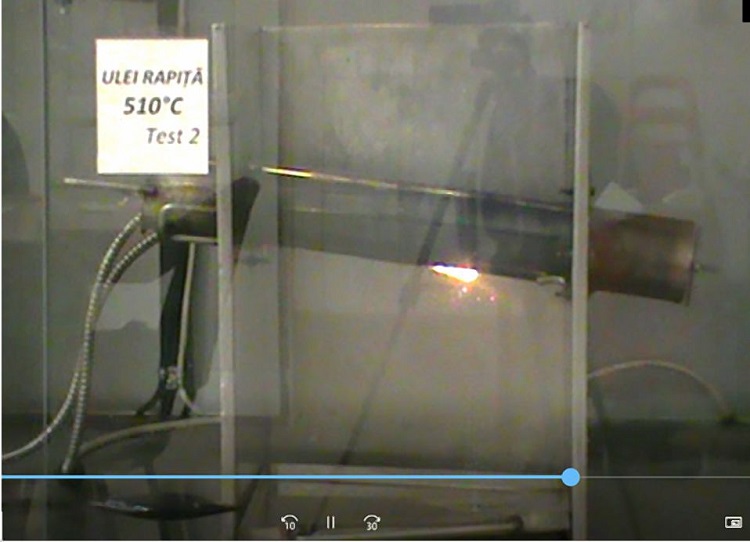
The images in the following figures show moments from the testing of rapeseed oil [10], at different temperatures of the metal surface. Figure 3 shows that rapeseed oil cannot be considered non-ignitable at 505 °C because for at least one of the 3 tests performed, the rapeseed oil caught fire. At a lower temperature, 495 °C, all three tests did not produce ignition of the rapeseed oil. At temperatures higher than 510 °C, the ignition of the oil occurs more intensely, with a larger flame (Figure 4)
 |  |
| Smoke after the first drop, second 2 | Burns in 3 seconds |
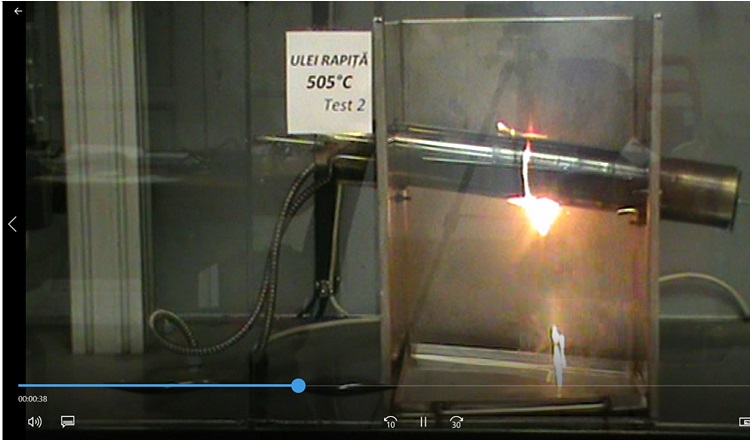 | 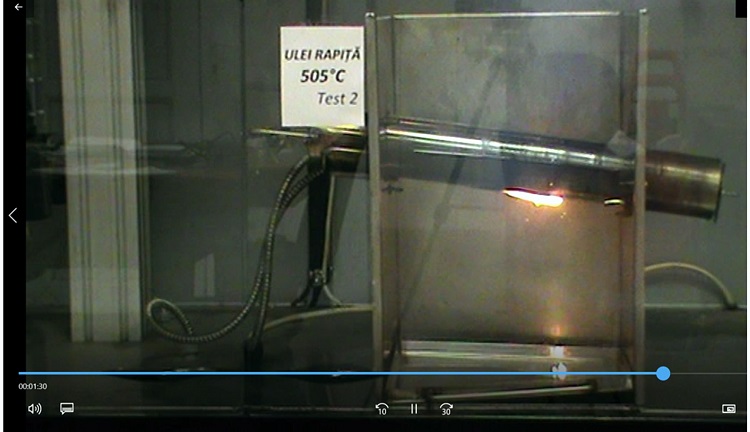 |
| Second 55 | Second 55 |
| a) | b) |
| Figure 3. Tests with rapeseed oil, at inclined tube temperature of 505 ºC: a) rapeseed oil did not ignite, b) rapeseed oil ignited | |
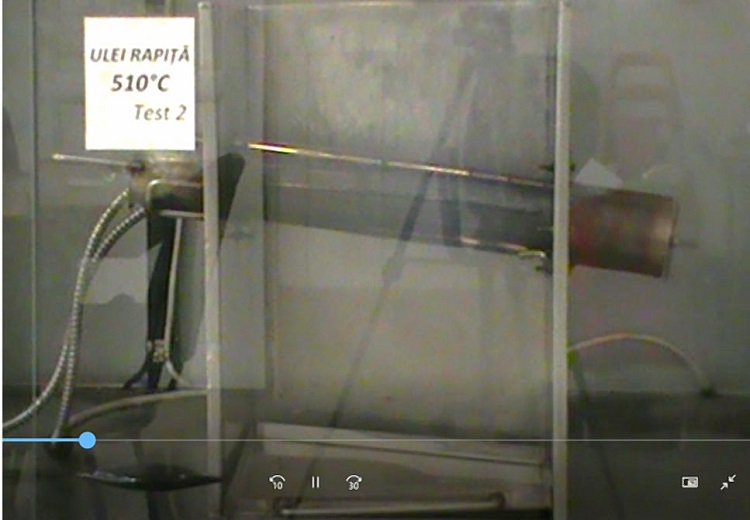 | 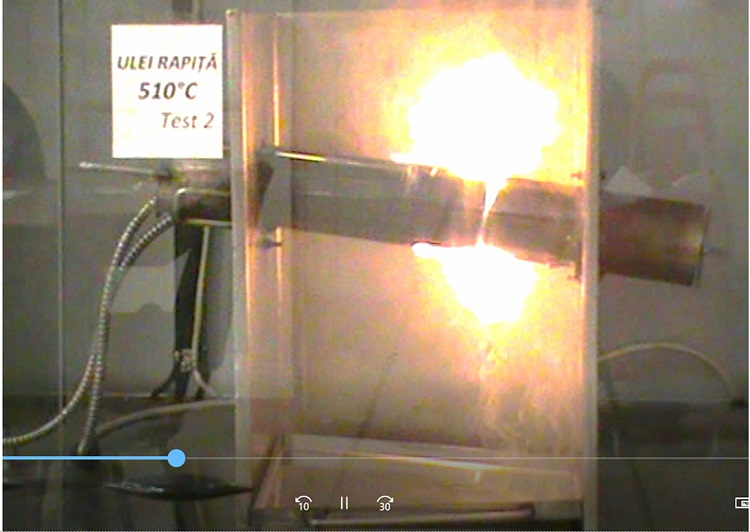 |
| a) The first drop of oil | b) 9th second |
 |  |
| c) 16th second | d) Second 55 |
| Figure 4. Test No. 2, with rapeseed oil, at inclined tube temperature of 510 ºC | |
If an ignition temperature is required, it shall be determined by the half-range method, which is limited by a tube temperature at which the fluid does not burn and one at which the fluid ignites. For example, Figure 5 shows the results of the tests, in the order in which they were performed and until three consecutive tests are obtained for which the fluid does not burn. For results obtained from testing vegetable oils, their fatty acid composition shall also be specified. Table 1 shows the fatty acid composition of the oils tested.
 Figure 5. Test results for rapeseed oil
(blue – oil is not burning, red – oil is burning)
Table 1. Composition of tested vegetable oils in fatty acids (%wt) (analysis carried out by Expur Bucharest)
| Acid | Simbol | Rapeseed oil | Olive oil | Soybean oil | Corn oil | Rice oil |
| [10] | [17], [18] | |||||
| Myristic acid | C14: 0 | 0,06 | - | 0,11 | 0,05 | 0,5 |
| Palmitic acid | C16: 0 | 4,60 | 12,6 | 12,7 | 12,4 | 20,3 |
| Palmitoleic acid | C16: 1 | 0,21 | 1,2 | 0,13 | - | 0,4 |
| Heptadecanoic acid | C17: 0 | 0,07 | 0,1 | 0,05 | 0,12 | 0,25 |
| Stearic acid | C18: 0 | 0,18 | - | 5,4 | 2,10 | 3,10 |
| Oleic acid | C18: 1 | 1,49 | 79,3 | 21,6 | 28,45 | 41,2 |
| Linoleic acid | C18: 2 | 60,85 | 4,7 | 52,40 | 54,1 | 31,4 |
| Linolenic acid | C18: 3 | 19,90 | 0,8 | 5,70 | 1,1 | 1,30 |
| Arachidic acid | C20: 0 | 7,64 | 0,4 | 0,25 | 0,40 | 1,1 |
| Gondoic acid | C20: 1 | 0,49 | 0,25 | 0,16 | 0,35 | 0,6 |
| Other fatty acids | 4,51 | 0,65 | 1,5 | 2,03 | 0,1 | |
Conclusions
Based on experimental data, the tested vegetable oils have good resistance to ignition on hot surfaces, as the minimum temperature at which they do not ignite is 490 °C (olive oil), but higher than that of a typical mineral hydraulic oil (Figure 6). It is observed that vegetable oils have the minimum ignition temperature on a hot surface between 490 °C and 515 °C, which would result in the fact that it is not the concentrations of the constituents that matter, but their presence in the respective oil, even in low concentrations, a conclusion also highlighted in [Georgescu, 2018 ] [19]. Winterized rapeseed oil has a much better fire behavior: it does not burn on a surface heated to 570 °C, but its price is higher. The components with short chains will ignite first, but will generate enough energy to further ignite the components with higher molecular mass.
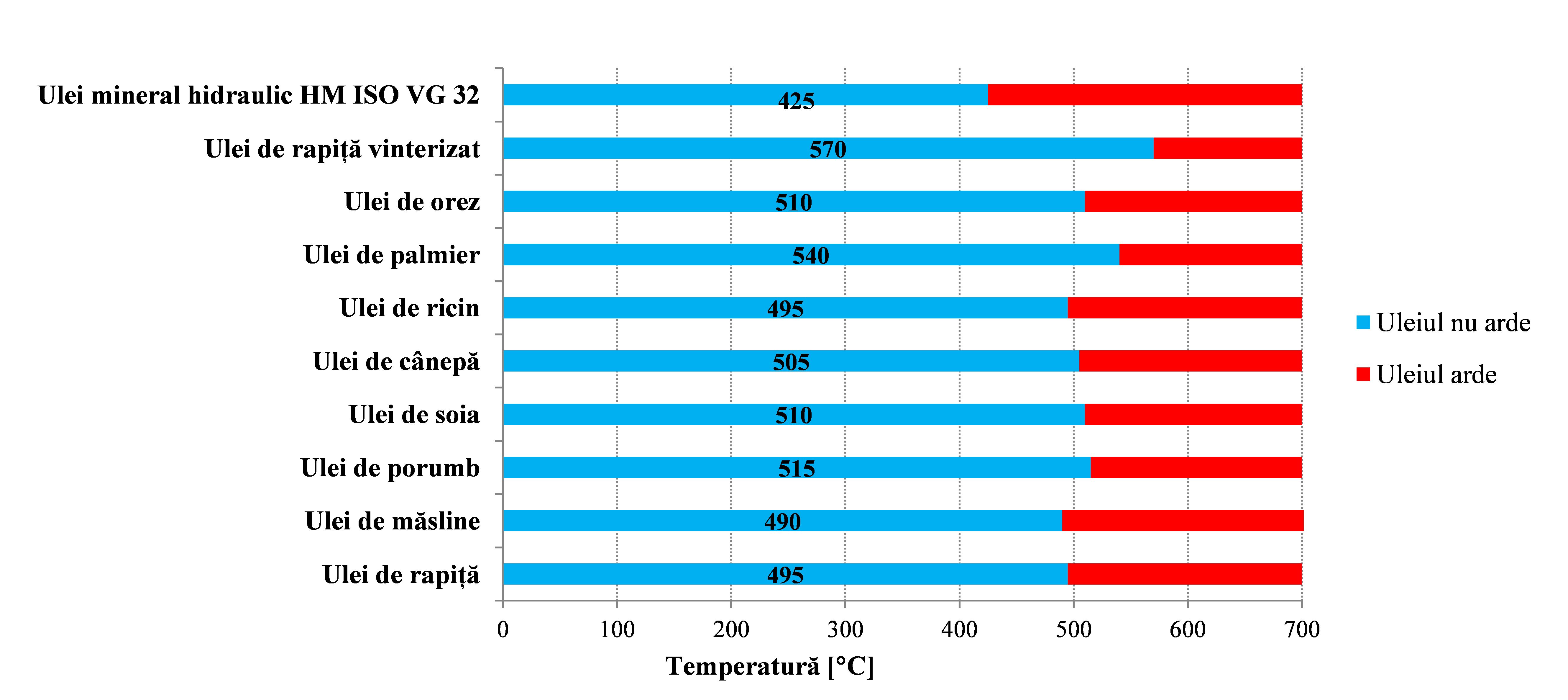 Figure 6. Hot surface ignition temperature of the tested vegetable oils
The conditions for the effective use of the results of the fluid fire resistance tests are the knowledge of the possible tests that can be performed, the selection of the appropriate and useful ones for improving the operating safety. The list of fluids that can be selected and the list of tests that they must “pass” must be known and established even at the equipment design stage in order to obtain the solution that reduces the fire risk. It is important to analyze similar accidents, related to real applications in the same field of activity (and not only) in order to obtain possible improvements of the equipment, the technological process, the environmental protection and for the improvement of the operators.
These results argue once again that experimental results are necessary in assessing the fire risk when using technical fluids and that adding a base oil does not guarantee a priori better flammability characteristics, even if the additive suggests an improvement.
Another pertinent observation is that the temperature range between tests must not be less than the tolerance for the measured temperatures; for this installation and the range 20-700 ºC, it was determined to be ± 3 ºC, so the difference between the temperatures determined as the maximum temperature at which the fluid does not burn on the hot surface and the minimum temperature at which the fluid ignites on the hot surface cannot be less than 6 ºC.
Bibliography
- Hámor, T., 2004, Sustainable Mining in the European Union: The Legislative Aspect, Environmental Management, 33 (2), p. 252-261.
- The 7th Luxembourg Report, March 3,1994, 4746, Doc. No. 10/91/XNUMX, Requirements and Tests Applicable to Fire-Resistant Hydraulic Fluids used for Power Transmission and Control.
- Council Directive 92/104/EEC of 3 December 1992 on the minimum requirements for improving the safety and health protection of workers in surface and underground mining (twelfth individual Directive within the meaning of Article 16(1) of Directive 89/391/EEC) (OJ L 404, 31.12.1992, p. 10), as amended by: Directive 2007/30/EC of the European Parliament and of the Council of 20 June 2007 Official Journal L 165, p. 21, 27.6.2007, https://eur-lex.europa.eu/legal-content/RO/TXT/PDF/?uri=CELEX:01992L0104-20070627.
- Decision No. 1.049 of August 9, 2006 on the minimum requirements for ensuring the safety and health of workers in the surface and underground extractive industry, https://legislatie.just.ro/Public/DetaliiDocument/74627.
- Gere R., Hazelton T. (1993) Rules for choosing a fire-resistant hydraulic fluid. Hydraulics & pneumatics, 46, 4 37-42.
- Grosshandler, W. (2001). (editor), Work on Fire Testing Measurement Needs,Proceedings, https://tsapps.nist.gov/publication/get_pdf.cfm?pub_id=861084.
- Jagger SF, Nicol A., Sawyer J., & Thyer AM (2004). The incorporation of fire test data in a risk-based assessment of hydraulic fluid fire resistance, INTERFLAME, 569-576
- Council Directive 92/104/EEC of 3 December 1992 on the minimum requirements for improving the safety and health protection of workers in surface and underground mining (twelfth individual Directive within the meaning of Article 16(1) of Directive 89/391/EEC) (OJ L 404, 31.12.1992, p. 10), amended by Directive 2007/30/EC of the European Parliament and of the Council, Text with EEA relevance of 20 June 2007, https://eur-lex.europa.eu/legal-content/RO/TXT/HTML/?uri=CELEX:01992L0104-20070627.
- Zink, MD (2000). Fire resistant hydraulic fluids: shifting definitions and standards, Proceedings of the 48th National Conference on Fluid Power, paper 105-8.3.
- Guglea D., Evaluation of the tribological behavior of some lubricants based on rapeseed oil and nanoadditives (hexagonal boron nitride and graphene), Doctoral thesis, "Dunărea de Jos" University of Galați, 2022.
- Wright BR, Mowery RB, LePera ME, (27-30 March 2000). Survivability It Could Be a Matter of Hydraulic Fluid!, Proc. 11th Annual US Army Ground Vehicle Survivability Symposium.
- NPFC – FED-STD-791 Testing Method Of Lubricants, Liquid Fuels, and Related Products Federal, https://standards.globalspec.com/std/14423744/fed-std-791e.
- SR EN ISO 20823:2004 Petroleum and related products - Determination of flammability characteristics of fluids in contact with hot surfaces - Hot metal flammability test.
- Phillips WD, Goode MJ, Winkeljohn R, (2000). Fire-Resistant Hydraulic Fluids and the Potential Impact of New Standards for General Industrial Applications, Proceedings of the 48th National Conference on Fluid Mechanics and Fluid Power, Chicago, April 4-6th, 69-79.
- Shermann, JV (2005). Current Standards for Certification of Fire-Resistant Hydraulic Fluids Used in General Industrial Applications, Fluid Power Journal, Nov.-Dec., 2-9.
- SR EN ISO 12922:2020 Lubricants, industrial oils and related products (class L). Family H (Hydraulic systems).
17. Șolea LC, Deleanu L. (2020). Flammability tests on hot surface for castor oil. Mechanical Testing and Diagnosis, (X)4, 30-34.
- Solea, C.L., (2013). Contributions to the study of the rheological and tribological behavior of biodegradable lubricants based on vegetable oils. PhD thesis, "Dunărea de Jos" University of Galați, Romania.
19. Georgescu, C., Cristea GC, Șolea CL, Deleanu L., Sandu IG (2018). Flammability of Some Vegetal Oils on Hot Surface, Chemistry magazinee, 69(3), 668-673. http://www.revistadechimie.ro/pdf/29%20GEORGESCU%20C%203%2018.pdf.
Read on White Art and other interesting articles.

