




• Food and Agriculture Organization (DO IT) declared 2023 as the year of the millet. The grain thus returns to the attention of specialists and producers.
Millet belongs to the category of gluten-free cereals. It has a high fiber, calcium and iron content, as well as a short growing cycle. It is tolerant to climatic stress (heat and drought), pests and diseases, these characteristics making it a nutritious and sustainable food source. And in addition to the opportunity to meet various food needs, millet cultivation can also support economic growth at the same time.
These ancient cereal varieties can be grown on both very poor and fertile soils and do not deplete soil nutrients. Beyond their nutritional benefits, these qualities make millet an ideal solution for countries to increase self-sufficiency and reduce dependence on imported grains.
By enabling the exploitation of land in arid areas, it contributes to reducing soil degradation, supporting biodiversity and sustainably restoring soils. And because it can be grown on marginal land, it will not replace other crops.
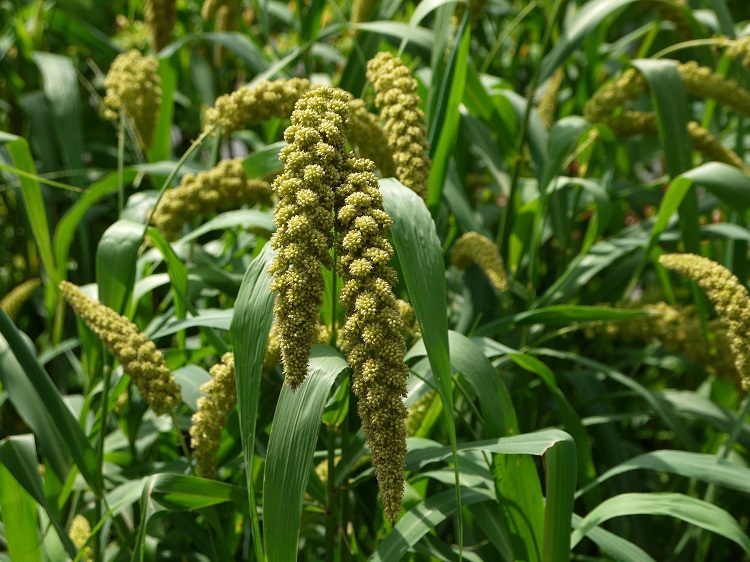
Benefits millet has been known for thousands of years, being an ancient grain consumed by humans since 7.000 years ago. Evidence shows that it played an essential role in the diet of people in southern Europe until modern agriculture replaced it in the early 1900s with the more productive wheat and corn.
Millet has a high concentration of carbohydrates, minerals, vitamins and amino acids vital for the body's health. The nutritional values for 100 g of boiled millet are: Protein – 3,51 g; Carbohydrates – 23,7 g; Fibers – 1,3 g; Magnesium – 44 mg; Copper – 0,161 mg; Phosphorus – 100 mg; Manganese – 0,272 mg.
The valorization and reintroduction of millet to the attention of consumers

Europe is currently experiencing extreme climate conditions and millet is a resilient and adaptable crop. Thus, the global manufacturer of gluten-free foods Dr. Schär started a project to valorize and reintroduce millet to the attention of consumers. Vitam - Varietà Italiane di Miglio – is a project aimed at new development varieties of millet adapted to European pedoclimatic conditions.
The objective of Dr. Schär's company through the VitaMì project is to obtain new high-quality millet varieties with improved agronomic, technological and nutritional characteristics to be included in the supply chain. These varieties will be able to respond not only to new environmental protection requirements, but also to the needs of consumers who must follow a gluten-free diet.
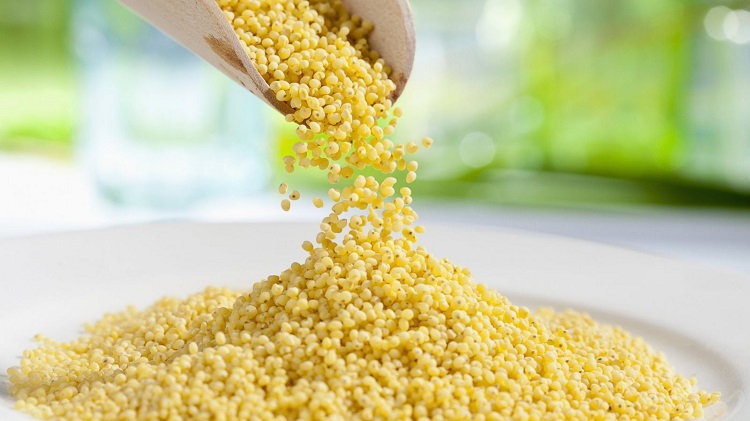
Despite its many health benefits, millet is also known to contain anti-nutrients, such as phytic acid, which block or reduce the body's absorption of other nutrients, leading to deficiencies. However, phytates are mainly found in the millet husk, which is removed for human consumption, and a person with a balanced diet is unlikely to experience adverse effects.
However, to solve this concern, Dr. Schär's specialists chose, among the many types of millet, to cultivate millet (Panicum miliaceum), which has one of the lowest concentrations of phytate.
This particular variety of millet, in addition to being high in vitamins, iron and minerals, is also very tolerant of drought conditions and heat waves, which are increasingly common in Europe.
Millet – a neglected crop

Despite its health benefits and adaptability under climatic stress, millet culture has been neglected. Currently, maize and wheat yields can reach up to 20 tonnes per hectare in the most productive environments, compared to about two tonnes per hectare for millet.
The situation may be changing, however, and that is because, in the current global conditions, major producers are focusing on promoting minor crops such as sorghum, buckwheat and millet as a source of nutritious and sustainable food. Millet, in particular, can greatly contribute to a more food-secure world and reduce grain shortages caused by recent conflicts and drastic climate change.
According to Dr. Schär's company, the VitaMì project is being carried out in the name of biodiversity. Currently, 40% of plant species are in danger of extinction. Rapid climate change, drought, deforestation, urbanization, pollution and intensive monoculture are among the main causes of this phenomenon.
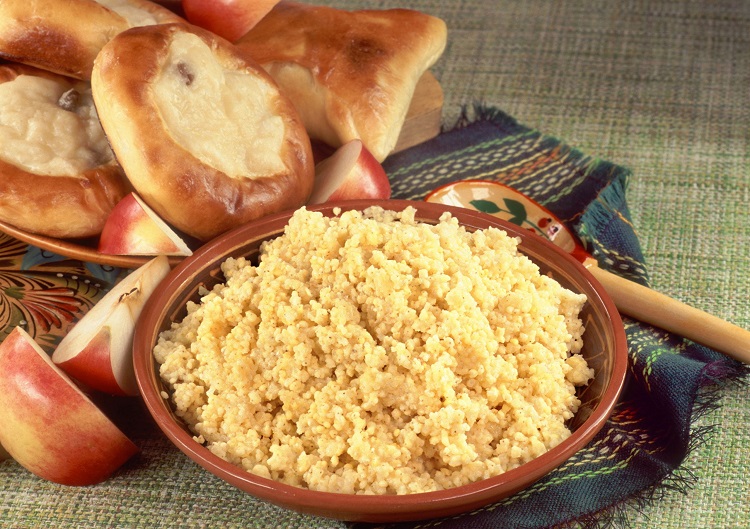
In 2022, the first field trials and the initial selection and evaluation of the best millet varieties began. To date, the VitaMì project has cultivated approximately 6.000 millet stems from four different crosses, with 1.000 plants selected to be brought into the field.
The company hopes its breeding program, which began in 2020 at locations in Italy and Poland, will now restore balance and significantly increase millet yield. A thorough review of the ongoing project will be conducted in the coming period, with the aim of distributing the first seeds to farmers in 2025 and including millet in the supply chain in 2026.
Article written by Gabriela Dan, Editor of Arta Albă
Read on White Art and: Amaranth, a gluten-free pseudocereal

 a declarat anul 2023 drept anul meiului.)