




• Food waste has been a big problem globally for some time. But things are changing and legislation is becoming stricter.
A recent United Nations study shows that the baking industry contributes massively to global food waste: over 13% of world production is lost between harvest and shelf, and 19% ends up in the trash in households, restaurants or factories. In the case of bread alone, out of the over 100 million tons produced annually worldwide, more than a million tons are thrown away.
The problem is not just with the end consumer. Large factories generate leftover dough, expired ingredients, or products rejected for aesthetic imperfections, although perfectly edible. Much of this material ends up in compost, in the garbage – where it produces methane through anaerobic decomposition – or, in the best case, in animal feed.

But things are already moving in the right direction. From March 2025, in England, any company producing more than 5 kg of food waste per week must collect it separately and hand it over to authorised transporters. The British government's goal: to completely eliminate food waste from landfill by 2030, in favour of biofuel production.
Initiatives that inspire
Globally, large companies are starting to act. Finnish group Dos has set itself the goal of halving food waste by 2030. Between 2020 and 2024, it has already achieved a 13% reduction. At the Vantaa factory, a recycling machine transforms surplus dough into new bread, saving over 300 tonnes annually. And in a unique project, Fazer is collaborating with Teerenpeli Brewery & Distillery to use unsold rye bread instead of malt – the result: a craft beer with a toasty taste.
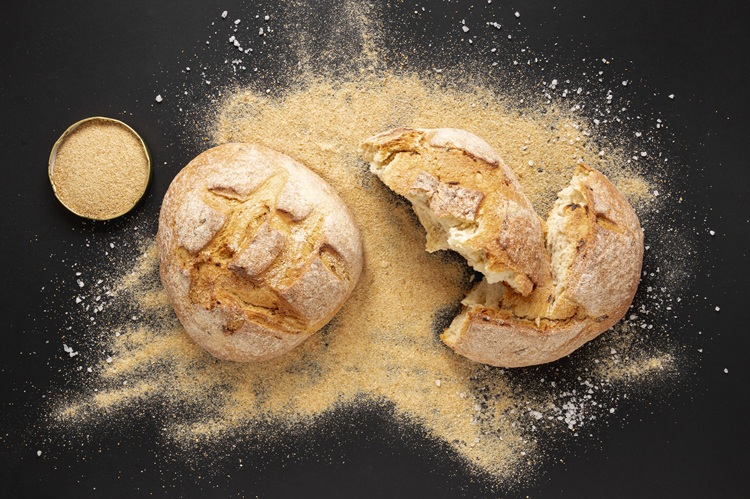
In Great Britain, Earth & Wheat rescues products rejected by supermarkets for aesthetic reasons – pancakes, flatbreads, crumpets – and delivers them via subscription. Since 2021, they have redirected over 600 tons of bakery products (and not only) to consumers.
Upcycling: waste becomes a premium ingredient
The most promising direction is to transform waste into new ingredients, especially since 57% of consumers, according to a study AIT Ingredients, are willing to buy products with ingredients upcycled – clean, minimally processed, sustainable.

In the USA, Upcycled Food Association (UFA), founded in 2019, has grown to over 200 members and offers global certification for foods that use raw materials that would otherwise be thrown away, with a verifiable supply chain and positive environmental impact. And in Europe, the Federation of European Manufacturers and Suppliers of Ingredients launched a grant program in April 2025 for bakeries and pastry shops that adopt ingredients upcycled.
What new ingredients are appearing?
- Malt residue flour (BSG): Globally, the brewing process generates around 40 million tonnes of this waste annually. After the wort (the liquid extracted from the grinding process) is extracted, it remains as an ingredient rich in protein, fibre and with fewer carbohydrates than regular flour. It has a nutty, malty flavour, a dark colour and is produced with low greenhouse gas emissions.
- FRUIT "imperfect"– bruised, overripe, close to expiration – become jams, compotes, fillings. The peels and seeds turn into flour. breadfruit (breadfruit), grown in the Caribbean, Africa and the Pacific, has a short shelf life and up to 80% of the harvest in southwestern Nigeria is lost. The flour made from this fruit is gluten-free, rich in fiber, potassium, vitamin C and has a low glycemic index. It was approved by the FDA in 2016, and companies such as Upcycled Foods collaborates with farmers in tropical regions to capitalize on it.
- Cocoa pulp: only 30% of the cocoa fruit becomes chocolate; the rest – pulp and shell – was thrown away. Now, companies like Barry Callebaut develops sugar substitutes from these scraps, with a naturally sweet flavor.
- Pectin and citrus fiber: extracted from apple pomace and citrus peels, pectin is used as a gelling agent, thickener or sugar substitute. Ingredion Inc. utilizes waste from pectin production to create citrus fibers that control moisture and improve texture in baked goods.
The trend is clear: the ingredients upcycled not only reduce waste, but also costs, differentiate products and meet the demand for healthy and responsible food. Success depends on investment, but the growing interest of raw material producers and authorities suggests that this direction has huge development potential.
Article written by Gabriela Dan, Editor-in-Chief Arta Albă
Read on White Art and: Special flours for frozen and pre-baked bakery products


