




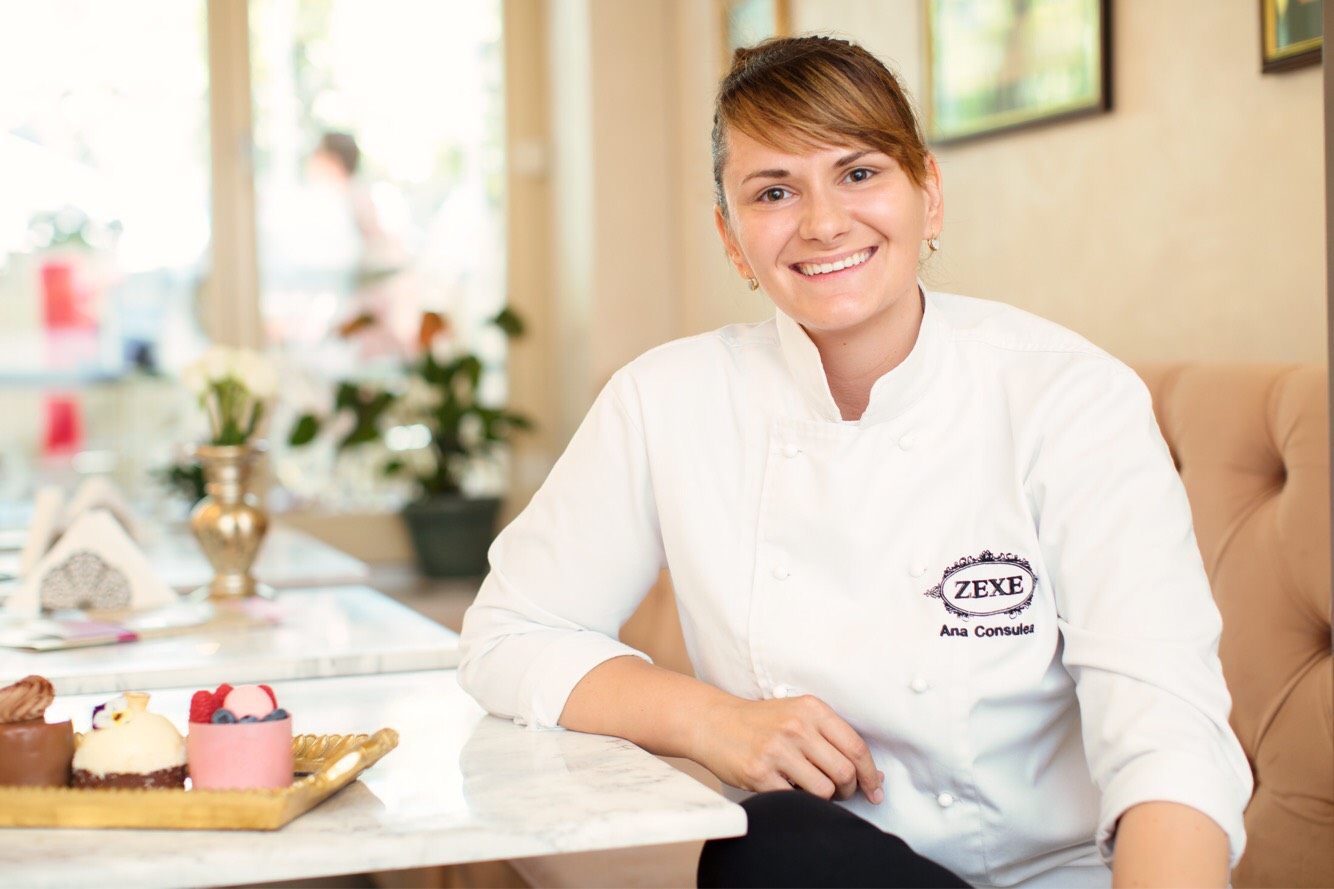
• Reinterpreting historical desserts and bringing them up to date is quite a difficult task, but not impossible. He demonstrated this Ana Consulea, pastry chef and entrepreneur in the wonderful world of desserts. More precisely, Ana Consulea is the founder of the Zexe Brasserie confectionery and, more recently, of the Zelato gelateria. "We are more than a confectionery and a gelateria, we are a state of mind", Ana insists on stating with great conviction. And we take her word for it, considering the community of people that has gathered around her businesses.
Ana Consulea's story in the confectionery laboratory took shape thanks to a school in France, which she attended at the age of 20. The year he spent at the Confectionery School in Montbeliard was a revelation and also a confirmation of his future career. Years passed, tastes and working techniques evolved, however Ana Consulea continues to move the story forward.
1. Who is the man Ana Consulea?
A confectioner and an entrepreneur in love with his work and his life. A man who never seems to tire, and this I admit sometimes amazes even me. Since 2012, since I finished pastry school in France and returned to the country, I have been creating and building continuously. This whole evolution was organic, I believe very much in things made and grown that way. So I've put a tremendous amount of work and passion into everything I've done to date.
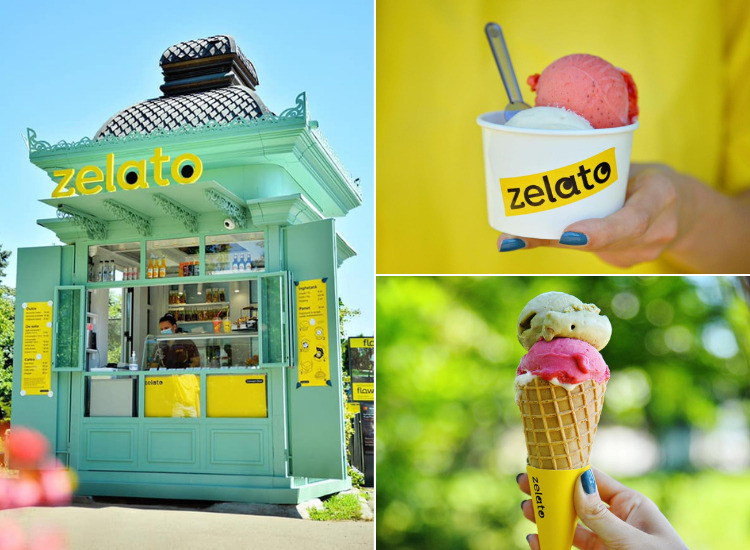
I started on this path with a confectionery laboratory, and in 2016 I ended up opening a brewery-confectionery (Zexe Brasserie), a step that seemed natural to me, but which I wanted to take at the right time, when I was really ready. And this summer, I fulfilled another dream: a gelateria (Zealot). I loved ice cream too much not to turn it into a brand that fully represented my playful vision of this product. The pandemic didn't stop me, on the contrary, it gave me an even greater impulse to act now and open a business perfectly adapted to the times we live in, which would work in takeaway and no longer depend on the decisions to close or open the serving spaces.
In short, I am a man who only does what he feels he must do and only things he believes in.
2. Moving on to the professional side, how did you discover your passion for the wonderful world of desserts?
This story is a bit longer. Since I was little, I worked in the Horeca field, more precisely in my parents' restaurants, where I performed a series of jobs in turn, from dish man to waiter and manager. It was an excellent school that taught me a lot about this field, but also about life in general. Inheriting the entrepreneurial spirit of the family, I also wanted my own business and felt an opportunity then. The restaurants hosted a number of events – weddings, anniversaries, baptisms. And because I have always had an affinity for aesthetic fields, I thought of opening a floral arrangement company and offering this service, which was complementary to the events. Time and an incident that proved to me how fragile and uncontrollable a flower business is made me give up. It wasn't exactly what I liked, I couldn't see myself doing this for the rest of my life, so I put the story behind me and moved on.
Seeing that I was probably slightly disoriented, my father guided me to look more carefully for my passion. And at that moment my most obvious passion was making cakes. At an amateur level, but with a lot of enthusiasm. I tried to take this passion to the next level, I bought books, I started studying, I looked for a pastry school. I couldn't find it at that time in Romania, so I enrolled in the Confectionery School in Montbeliard, France, and that's where it all started. The school in France has defined my career so far. It was an intense year, in which I accumulated practically 2 years. Here I fully learned not only the technical side of confectionery, but all the things that come with this job, or better said, this lifestyle: rigor, discipline, respect for quality. At 20, my age at the time, I was the oldest in school. And it was kind of a revelation for me, because I realized that people there take this job very seriously. If you want to become a pastry chef in France, you start small.

3. Over the years you have won numerous national and international awards. What is your soulmate and why?
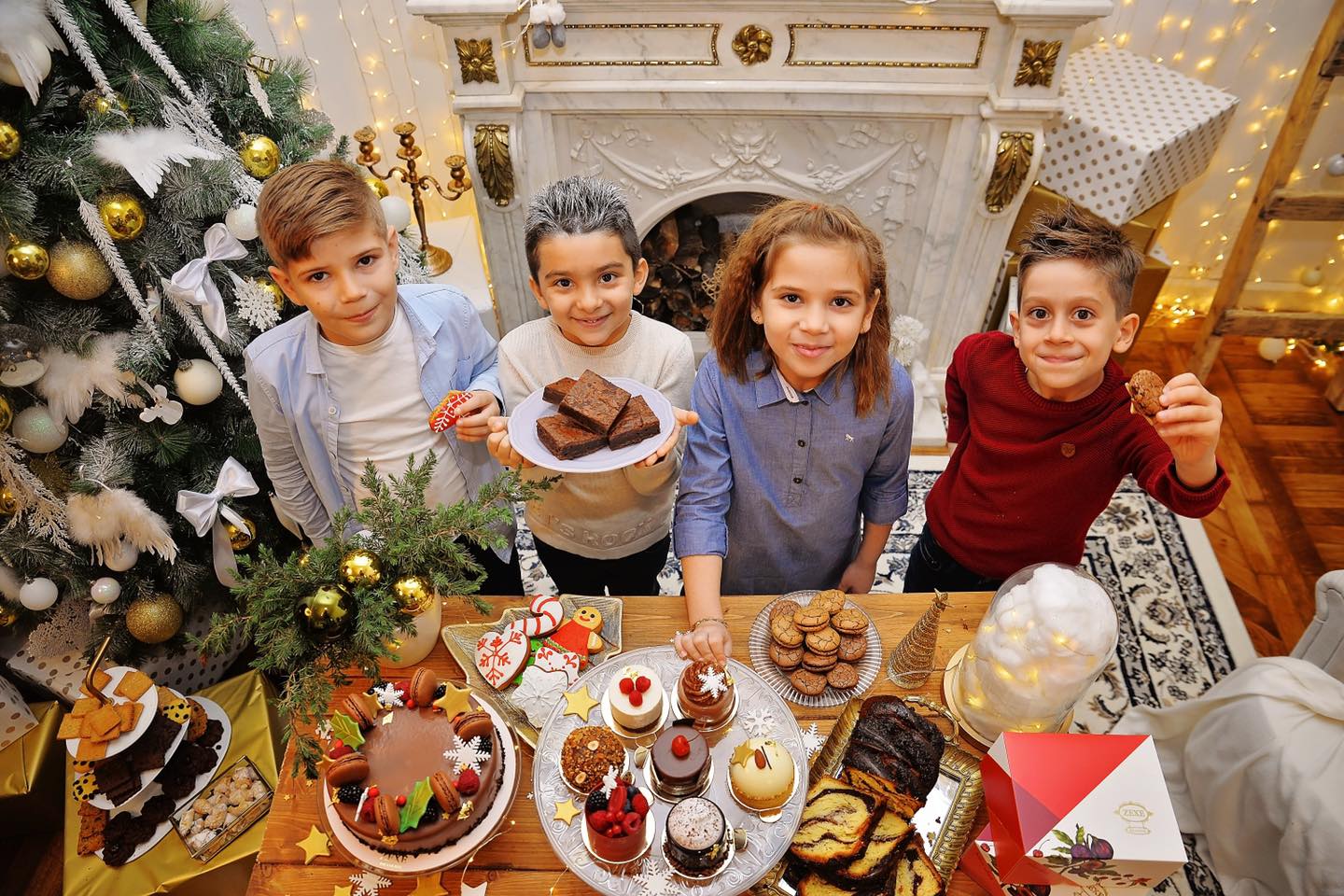
If I am strictly referring to the awards, the title "Pastry Chef of the Year” offered in 2019 by the prestigious Gault & Millau guide is an extraordinary honor for me. When an institution recognized worldwide for its exactingness gives you this distinction, you are confirmed that you are on the right track. In addition, it comes with a challenge, that of responsibility. You just can't let the bar down! And, beyond the awards, the success that makes me happy every day is the opportunity I have to contribute to shaping the taste of future generations. Yes, very many of our guests, both at Zexe Braserie and at Zelato, are children. We make memories and that makes me very happy.
4. You are currently managing Brasserie Zexe and the gelateria Zealot from Bucharest. What makes your premises different from similar ones in the country? How did you choose the names of the two places?
Zexe Brasserie or Braserica, as we call it, is a business that started as the smaller "sister" of Zexe - with a food menu inspired by the dishes served in Zexe restaurants, but in a more "light" version and, of course, with desserts in the foreground. This is what I wanted since I returned to the country: to restore the taste of Romanian confectionery, to show our public what a wonderful confectionery we have, to offer them the opportunity to enjoy at home the same kind of dessert as in the confectionery in France, but adapted to taste local. Meanwhile, Zexe Braserie has grown and formed its own identity, evolved into a stand-alone business with a different audience than Zexe Zahana and gathered around a fantastic community that appreciates our quality and attitude. People come to us because they find here more than just really good desserts. I find our stories, special spirit and a different team. They come to enjoy the cakes, but also to talk to us, to tell us about themselves and their lives. Precisely for this reason I did not want to replicate the Brasserie, because it is a special, unique place and I want it to remain so.

Zealot it's a business that has at its core the same quality that our guests are used to, but with a much more playful spirit than anything we've built so far. Play was absolutely necessary, I felt, in an ice cream business. And this is precisely what seemed to me to be missing from the already existing gelaterias. Zelato is centered around real artisanal ice cream and other desserts that are easier to transport and enjoy on a park bench or to-go than those on the Brasserie's menu. It is a business that responds to the new reality in this field. Rather than adapt a business that was not built for this (because at Brasserie the idea is about interaction and introduction to a separate world), I preferred to take the opportunity and make a new one, especially since I really, really wanted to to make something with ice cream. In addition, Zelato is a business that I can multiply much more easily.
5. What was the biggest challenge you faced on your way to success?
The biggest challenge for us was the biggest challenge for a whole world. Before the pandemic, I was on a big wave, I had made development plans for 2020, I had big thoughts, but now the calculation at home no longer matched the one at the fair. There has never been a greater challenge than this, for the simple reason that it was something that no longer depended on us and our powers. The things that are within our power are solvable, that's what I always thought when obstacles appeared in the way. It's been a real challenge to find the resources to keep going when a big part of why we do it – interacting with people – has disappeared overnight.
But with the help of our fantastic community, we were able to push on and make the most of this situation. We prepared packages and delivered them to our guests when physical interaction as we knew it was no longer possible, we met for ice cream on the sidewalk when the only way we could function was in store regime or when the terrace was not roomy for all our guests, and for Easter we made cakes that we sent all over the country. We found ways to stay in touch even when we couldn't be together physically. And in recent months, our guests spent their time on the terrace, even when the weather was not very friendly. During this time, I realized more than ever how strong the community around the business is. During those difficult months for the whole sector, our guests supported and encouraged us enormously, they ordered online, some of them even 50 cakes, during the Easter period, to motivate us to go further.
6. The businesses you run are today appreciated by thousands of consumers. How do you manage to keep your clientele loyal?
friends Zexe Brasserie and, more recently, you have Zealot i love not only desserts and ice cream but the whole story behind it. They know our concept, we know how in love we are with quality, moreover we often invite them to our (virtual) laboratory, they trust us and our work. We are more than a pastry shop and gelateria, we are a state of mind.
7. You are an example of a successful young entrepreneur. What advice do you have for pastry enthusiasts who don't have the courage to take it to the next level and open their own business?
First of all, I think it's good for them to know that the job of a confectioner and that of an entrepreneur are two different jobs. Sometimes, more precisely very often, the business man, the entrepreneur, is not on the same wavelength as the artist. You have to like entrepreneurship as much as you like confectionery, at least, and this is something that a pastry chef (or any other professional) should weigh very carefully before taking the entrepreneurial path.
8. We know that one of your strengths is the reinterpretation of interwar Romanian cakes. Please tell us briefly what the process of "birthing" a cake is, from the idea to the final product. What is the moment when you say to yourself "Yes! It's perfect like that!”?
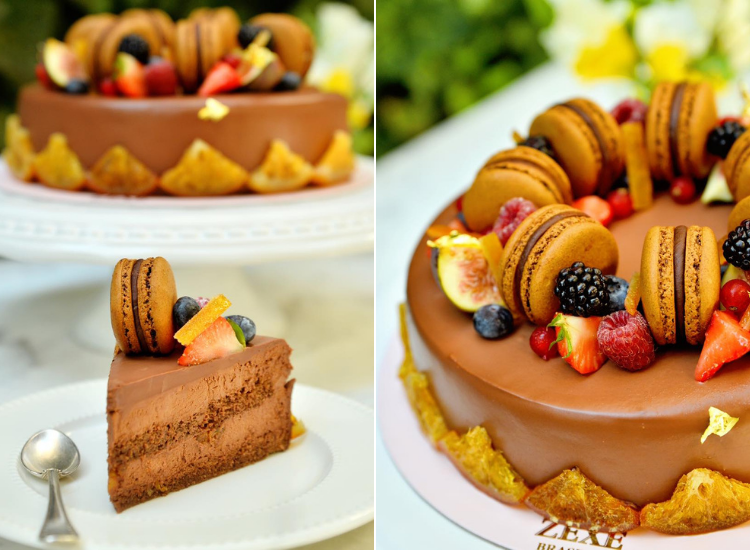
Reinterpreting historical desserts and bringing them up to date was no easy task. Ingredients and techniques have evolved, and so have our tastes. That is why a recipe from the interwar period cannot be exactly replicated today. Or, maybe, only the taste will not satisfy us. We tried to make the 4 historical desserts in our showcase exactly as they were then, only the final result was not exactly to our taste. People ate a lot more fat back then, while we're not used to it today. We had to find a formula to keep the main flavors from the original recipes (chocolate and orange, in the case of the George Enescu cake, or dark chocolate and pistachio, in the case of the Take Ionescu cake), so that the final result is memorable and as close as possible of the original version. I reduced the amount of butter and sugar, made them more airy. And we put our personal stamp on them. Countless tests preceded the final versions of the historic desserts that are in our display case today.
9. What do you think are the most important trends in the confectionery sector in Romania?
More and more confectioneries are starting to look for quality. Customers are more educated, they have experienced more, they have become more demanding. To stay in the market, quality is an essential condition. There is still room for improvement, but I'm glad to see that there is more concern for this than there was 4-5 years ago.
10. Our column is called PROFESSIONALS. In your opinion, what are the basic "ingredients" of a pastry professional?
Be willing to work very hard to achieve excellence (practice is 90% in this job, the remaining 10% can be said to be talent). This is where "passion” – if you don't like this field very much, you can't devote so much time to it that you become a professional. And have a lot of it patience – it is repetitive work, a lot of tests are done until we reach the final result. In addition, if it is to go further, business in this field is very complicated, depends on many factors and requires continuous involvement.
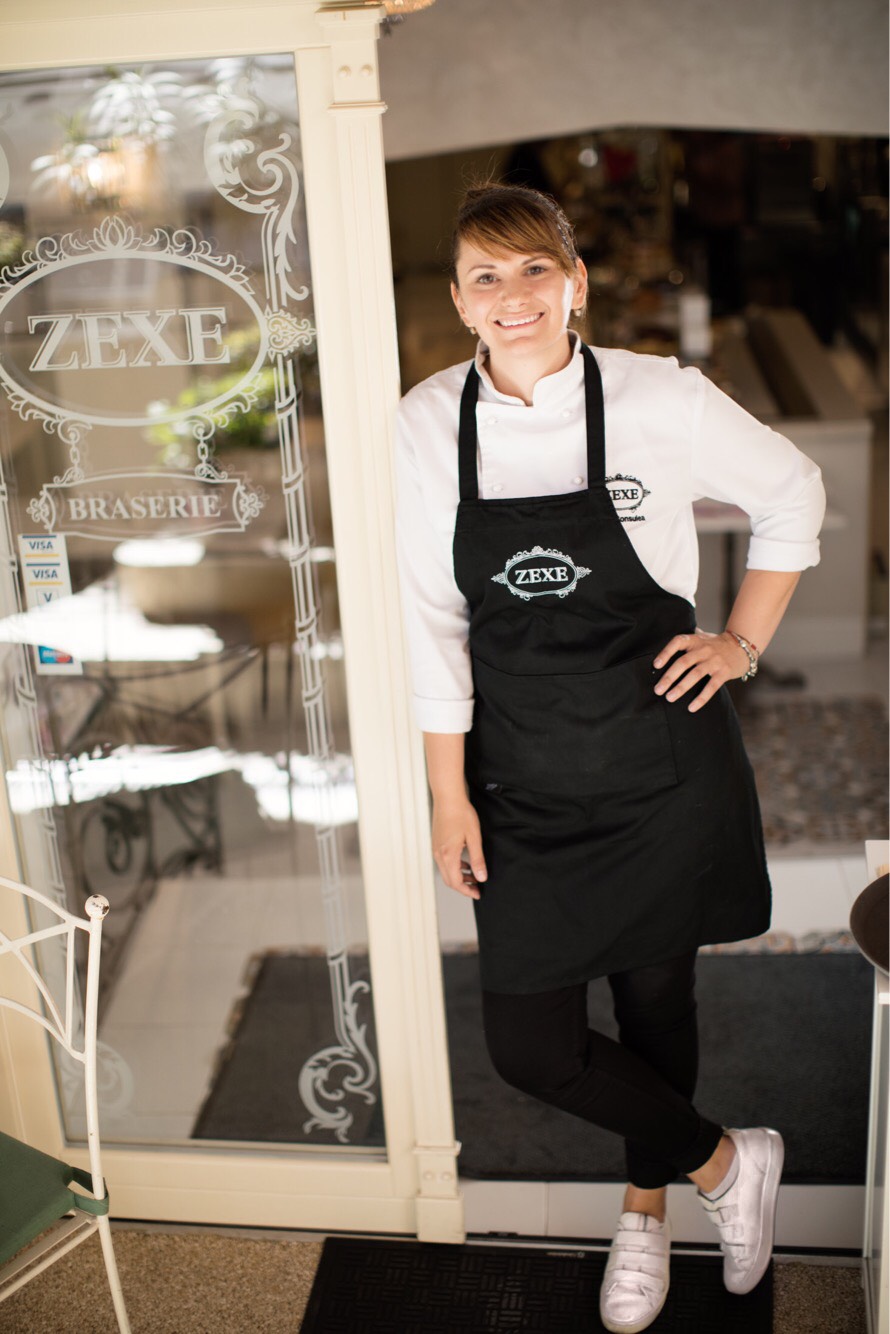
About Ana Consulea
Diplomas and specializations
• 2011-2012 – CFA Pays de Montebliard – diploma obtained: CAP Patisserie
• 2011-2012 – practice at Maison Vergne, under the guidance of Pastry Chef Eric Vergne, member of Relais Dessert
• November 2015 – Elle&Vire Maison de la Creme – Nicolas Boussin specialization course
• March 2017 – Hangar 78 – Confectionery specialization course Yann Couvreur
• November 2017 – Diego Lozano chocolate specialization course
• March 2018 – Antonio Bachour specialization course
• April 2018 – Bucharest – Valrhona specialization course – Dimitris Chronopoulos
Confectionery courses (teacher)
• DallesGo Pastry Course (2017 – present)
• Societe Gourmet Event House – collaborator 2017-2018
• Horeca School – collaborator
Most important awards won
• Gault & Millau 2019: Pastry Chef of the Year
• Gala Horeca Awards 2017: "The best Pastry Chef in Romania"
• Gala Horeca Awards 2018: "The best Pastry Chef in Romania"
• Gala Horeca Awards 2019: "The best Pastry Chef in Romania"
• Forbes "Top 30 under 30" (2017)
• Forbes "Top 30 under 30" (2018)
Interview conducted by Nicoleta Banu, Editor of Arta Albă
Read on White Art and: Another international recognition for Romanian confectionery

.)