




• Functional coffee, which offers more than just an energy boost, is rapidly gaining ground in consumer preferences around the world.
The global market for this segment has reached a value of $4,5 billion and continues to expand rapidly. People now want to combine their daily caffeine dose with additional benefits, such as improved sleep, reduced stress and increased physical endurance. This interest has led to an increased demand for natural adaptogenic ingredients, extracted from mushrooms, plants and herbs, which are integrated into innovative coffee blends.
• Ashwagandha
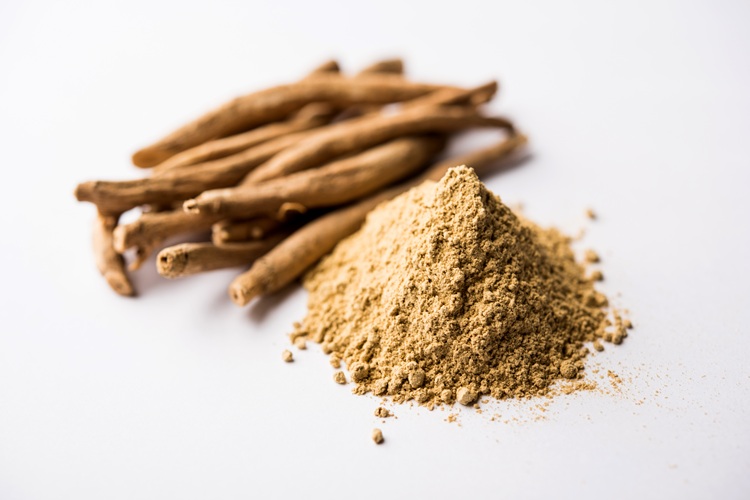
It is a perennial shrub grown in tropical and subtropical areas of Asia, Africa and Europe, scientifically known as Withania somniferaIts Sanskrit name comes from the smell of the roots, similar to that of a wet horse – "ashwa" meaning horse, and "Gandha" smell.
Rich in phytochemicals, this ingredient is a traditional element in Indian Ayurvedic medicine and has recently made its way into Western functional products, thanks to its reputation as an effective stress fighter and promoter of restful sleep.
Clinical evidence supports these claims: a 2021 systematic review examined seven studies that demonstrated that ashwagandha, either as an extract from the leaves or roots, or as a granulated powder from the dried roots, reduces anxiety and stress. Participants reported fewer episodes of insomnia and fatigue, along with lower serum cortisol levels compared to placebo groups. As a result, ashwagandha has become a common addition to many modern functional coffees.
Some blends combine ashwagandha with Lion's Mane, Himalayan pink salt, and maca to provide an enhanced energizing experience, while others include ashwagandha alongside mushrooms like Lion's Mane, chaga, and tremella, plus maca powder, promising increased energy without the negative effects of caffeine. Many of these products emphasize the need to use high-quality Arabica coffee beans to mask the earthy, slightly bitter taste of the concentrated extracts from the plant.
• Cordyceps
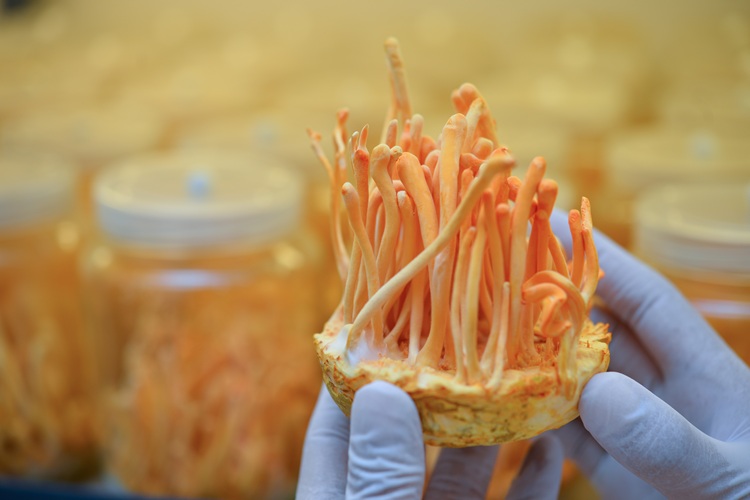
Cordyceps is a parasitic fungus present in various global regions, with no fewer than 750 species, of which approximately 35 are linked to potential beneficial health effects. The most appreciated are Cordyceps sinensis, which grows at high altitudes in the Himalayan regions, and cordyceps militaris, adapted to tropical climates in Asia, Europe and North America, both of which have a long history in traditional Chinese medicine.
With a salty and nutty taste, cordyceps is associated with improved athletic performance, anti-aging properties for the skin, and more robust cardiovascular health.
A 2019 study showed that it reduces oxidative stress, a contributing factor to heart disease, though much of the research has been based on animal models, with limited data on the impact on humans. However, many functional coffee blends integrate cordyceps, promising increased energy and stamina, mental clarity, and immune system strengthening, positioning them as ideal options for those looking for a natural daily boost.
• Lion's Mane ("Lion's Mane" )

An edible mushroom with a white, fluffy, hair-like appearance that grows on the trunks of dead deciduous trees in North America, Asia and Europe, Lion's Mane was recently named by the supermarket chain Tesco "the next big trend in mushrooms", and its popularity in Europe is growing, supported by celebrities and media presence.
Google searches for this ingredient increased by 450% overnight in May 2025, after a brief appearance on the show "Clarkson's Farm" from Amazon. Used since ancient times – the Greek physician Hippocrates is said to have included it in his medical arsenal around 450 BC – Lion's Mane is valued for its ability to relieve anxiety, improve mood and stimulate cognitive functions.
This is due to compound hericenones and erinacines, which some research suggests protects the brain against age-related decline. But experts are calling for more studies to validate these benefits. In addition to supplements, where sales volume increased by more than 1.300% through April 2025, according to Nielsen data, many consumers are choosing to consume Lion's Mane through coffee.
Some blends offer over 1.000 mg of Lion's Mane per serving, combined with B vitamins, to support mental clarity, nervous system health, and energy metabolism. Other formulas infuse Lion's Mane extract into adaptogenic coffees, targeting daily focus and clarity.
• Maca
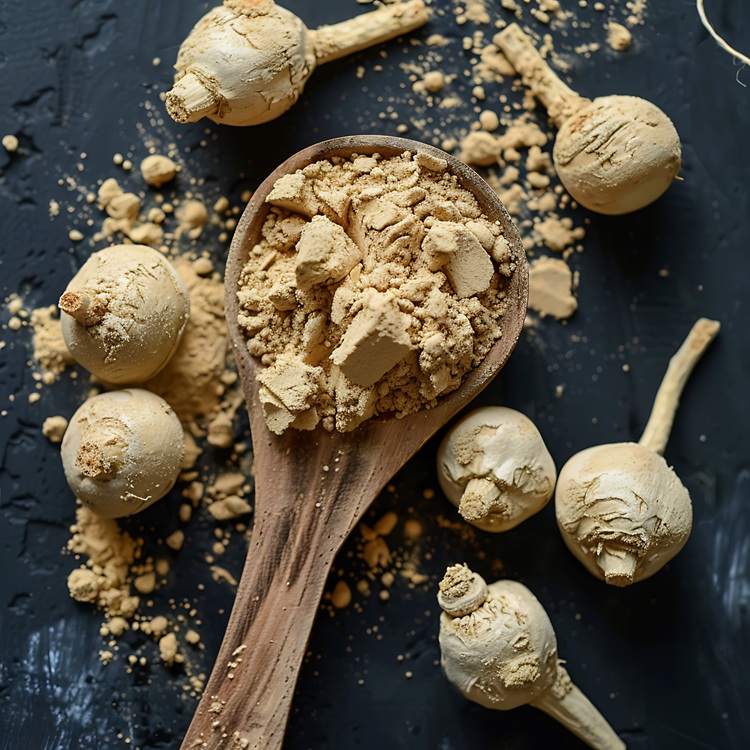
Maca, also known as Peruvian ginseng, is grown exclusively in the central Andes and has a creamy, malty flavor that makes it an ideal partner for functional coffees. Its root contains fiber, protein, carbohydrates, essential amino acids, and vitamins like iron and calcium, making it a powerful superfood. Indigenous populations in South America have used it for centuries to boost endurance, and recent studies have focused on its role in hormone regulation. For example, Chinese researchers observed a significant reduction in depression in postmenopausal women who consumed 3,3 g of maca daily, although the sample size was small, with only 29 participants, which requires further investigation.
Many functional coffees include a blend of about 368 mg of adaptogenic herbs, combining maca root with ashwagandha and Siberian ginseng, along with half the amount of caffeine of a regular coffee, to support focus, energy, and overall well-being.
• L-Theanine
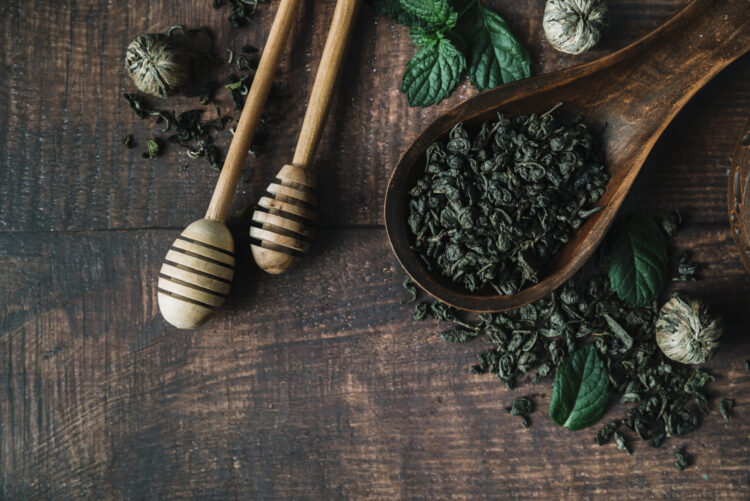
The amino acid, found in green and black tea leaves, is gaining more and more attention in the world of functional ingredients. It's thought to promote relaxation and counterbalance the stimulating effects of caffeine, with some studies suggesting it can induce an increase in alpha brain waves, associated with a state of calm, thereby reducing stress, anxiety and improving sleep quality — although the results are often inconsistent, as the researchers point out.
Globally, most L-theanine is produced synthetically through the reaction between glutamic acid and ethylamine, but this form is not authorized for sale in the European Union, according to Nutraceuticals Group. The natural variant, extracted by steeping tea leaves in a solvent, is allowed, but the process is expensive, reaching 20 times the price per active unit. This explains why l-theanine is less common in functional coffees, although there are products that use l-theanine meticulously extracted for purity and high bioavailability, providing a relaxing balance.
A trend destined to become a habit?
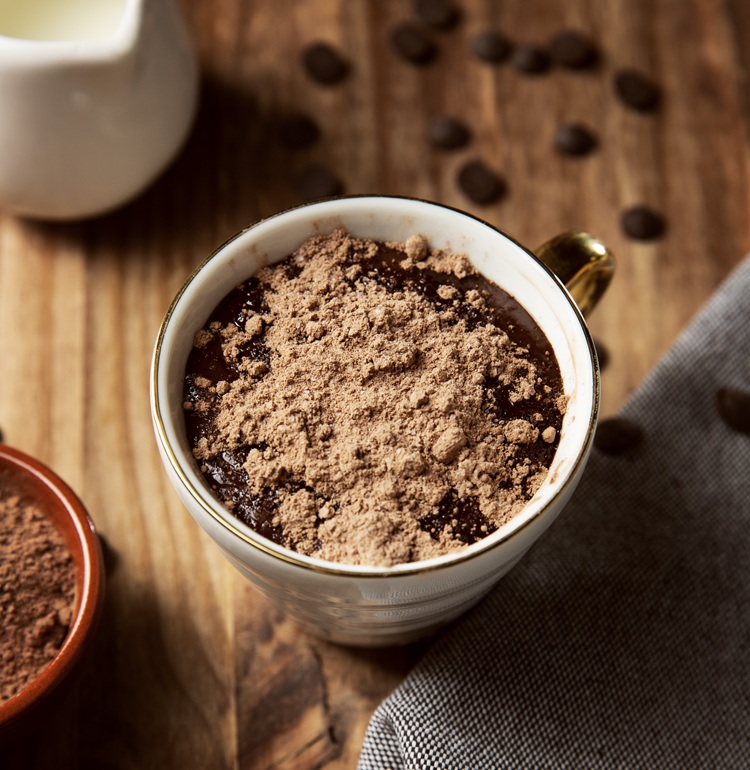
Functional coffee is no longer just an experimental niche, but a clear direction for how modern consumers choose to start – or continue – their day. By combining the daily ritual of coffee with the power of adaptogens and bioactive compounds from ashwagandha, cordyceps, Lion's Mane, maca and L-theanine, these blends offer more than just an energy boost: they propose a careful balance between stimulation and calm, between performance and recovery.
As the global market for functional coffees continues to grow rapidly, it is becoming clear that this category responds to a deep need: that of transforming a regular beverage into an ally of everyday well-being.
In a world that demands more and more from the body and mind, but also yearns for natural balance, functional coffee seems to have found the right formula: tradition reinvented through science and nature. Whether you choose a cup for focus, for increased endurance or simply for a gentler morning with the nervous system, one thing is certain – coffee is no longer just a drink. This improved version of the old routine has become a gesture of self-care.
Article written by Gabriela Dan, Editor-in-Chief Arta Albă
Read on White Art and: Coffee, a key element in attracting customers: An analysis of current trends in the bakery industry

