




• Fragments of the culinary history of mankind go beyond the status of a history tab, crossing the centuries to the present day, to give us an image of ancient civilizations, but also to claim their place on the tables of enthusiasts.
Have you ever wanted to experience the bread and pastries of Ancient Rome? Now you can! Farrell Monaco, archaeologist, writer and foodie, recreates ancient Roman recipes using techniques and ingredients she discovers in archaeological remains, art and ancient texts, focusing her research on the Roman Mediterranean area.

Pistrinum, the online bakery launched by Farrell Monaco in 2021, is on a mission to revive ancient Roman culinary traditions and recreate breads and pastries enjoyed thousands of years ago in Ancient Rome. Monaco's signature pastries are made using old and very old methods and are available exclusively on goldbelly.
"Panis Quadratus"
It all started when Monaco decided to bring the recipe back to life "Panis Quadratus", the round bread, divided into eight segments of equal size, preserved among the remains of the city of Pompeii.

Her discoveries also arouse the interest of those from National Geographic, who ask him to send the recreated version of Panis Quadratus to their offices in Washington, DC.
Farrell will bake these special breads in the traditional Roman way, from the ingredients, to the tools used in the manufacturing process, including even a manual mill, with which he will grind the two kilograms of flour used to produce the loaves.

During the pandemic, when, due to isolation, people became preoccupied with cooking, or baking, Farrell Monaco, through his blog Tavola Mediterranea, transmits both the recipe of "Panis Quadratus", as well as baking tricks, creating a real frenzy among the followers of his posts. Thus, along with many types of bread baked in the ovens of the isolated, the ancient bread is coming back in force, on social media, but also on the modern man's table.

next to "Panis Quadratus" other specialties of ancient bakeries begin to gather, which thus regain their place in the diets of both history and gastronomy enthusiasts.
"Lomentum"– breads with chickpeas
Soft on the inside with a crispy crust, these little loaves are full of protein and delicious! Made with ground wheat and chickpeas, they incorporate the familiar ingredients of commercial bread from ancient Rome.

Roman cooks and bakers wasted nothing in their kitchens, and this tradition is preserved at Pistrinum. These "miniatures" are actually the "holes" of the ring-shaped loaves, the scraps of dough that bakers would surely have kept for later use in soups and stews. Due to the addition of chickpeas, these breads can be denser and drier than modern breads.
Mini wand "Ciriola"
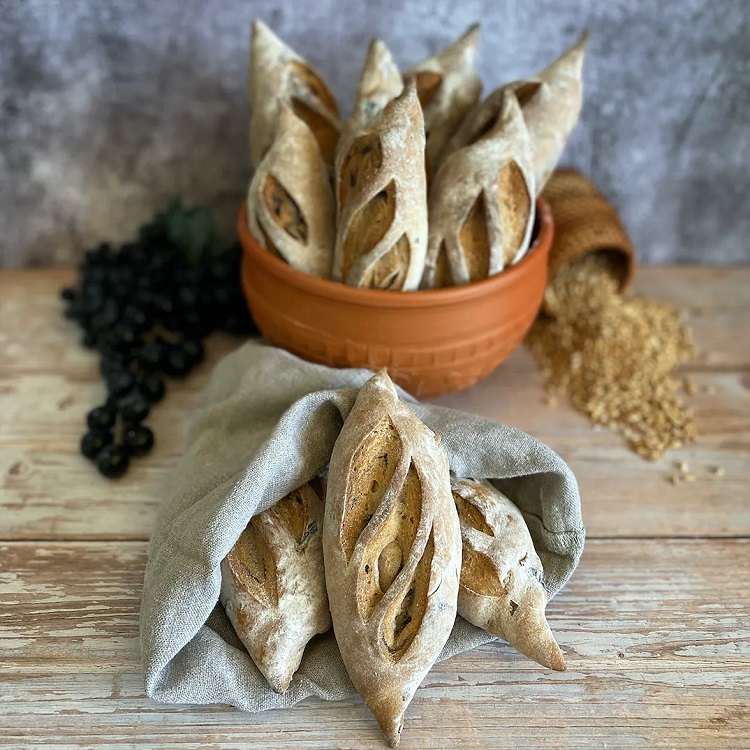
Concerned with the zero-waste trend since ancient times – when food meant survival, so nothing was thrown away – after pressing the grapes to make wine, Roman bakers often used the pulp and skins, for bread called "whiskers". Based on the writings of Cato the Elder and the traditional Roman bread form called "pencil", Farrell recreates this sweet bread in the form of a mini-baguette.
"Mensae" – fried flatbreads
Crunchy, savory and delicately salty, these Roman toasts jump straight from the pages of Virgil's Aeneid onto the tables of the modern consumer! "Mensae", as they are called in the Aeneid, are flatbreads that were once used in the Roman Mediterranean region as both plate and cutlery.

Roman forerunners of the pizza base, these breads eliminated the use of a plate and were also a means of holding and making it easier to eat food with sauces. Literally translated as "meals" in the Aeneid, bread was flat, sturdy, and able to support food on it.
"Rosette" - tasty Roman bread

These minibreads are made from wheat coarsely ground with a stone, starter dough with legume yeast and two ingredients used in Roman cuisine and bread making, according to the writings of the historian Pliny the Elder: coriander and asafoetida (which has an onion-like flavor).
The bread looks like a small one "rosette", hence the name, a floral sculptural component widely used in the Bronze Age and the Mediterranean Classical period.
The biscuits "Buccellatum"
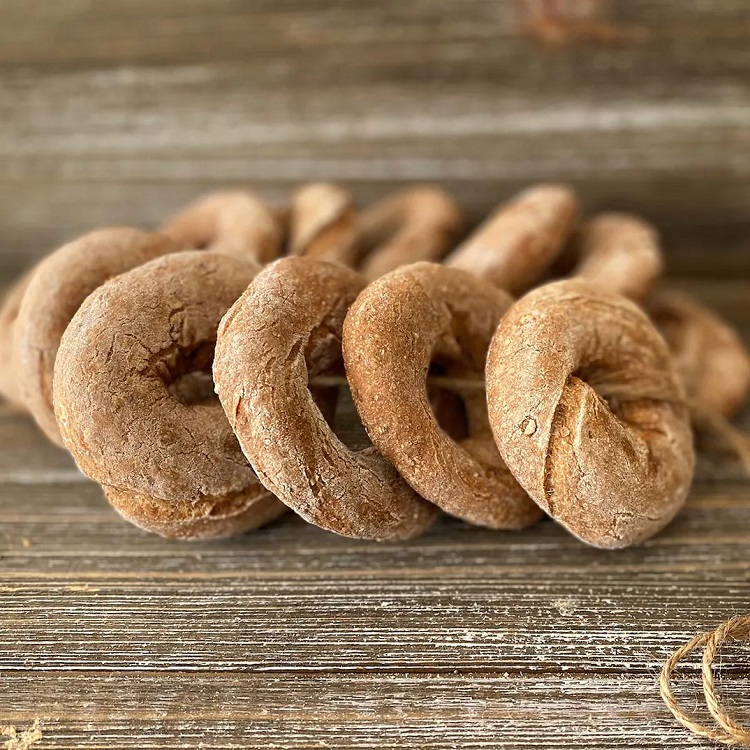
As well as "Panis Quadratus", "Buccellatum" it is also a Roman bakery product that was found in the archaeological site of Pompeii. Originally made for the Roman army, these crunchy wheat-based biscuits are baked twice, like breadsticks or crostini (modern Italian products), and eaten after soaking in water, oils and vinegar, or added to soups, stews and stews, just like croutons or a modern cracker.
"globes"– honey and poppy seed donuts

Crispy, fluffy and sweet, these fried honey donuts are a Roman forerunner of the dessert struffoli. As found in the writings of Varro and Cato the Elder, "balls" it was a popular Roman dessert, sweetened with honey and sprinkled with poppy seeds. The donuts were eaten individually as a snack, or several were served in a bowl, glazed with warm honey.
Photo source: www.goldbelly.com, tavolamediterranea.com, www.worldhistory.org.
Article written by Gabriela Dan, Editor of Arta Albă
Read on White Art and: Amaranth, a gluten-free pseudocereal

